Friday, June 8, 2012

D-Day recalled by 102-year-old Army veteran Bea Cohen of Los Angeles. She was there. She made a difference.


VERNE STRICKLAND BLOGMASTER / JUNE 8, 2012

DON'T KNOW WHAT IT WAS, BUT D-DAY HIT ME HARDER THIS YEAR THEN EVER BEFORE. I'M 75 -- MAYBE I'M JUST GROWING UP. BUT I COULDN'T LET THE STORIES GO, AND I THINK POSTED FOUR D-DAY FEATURES THIS WEEK. IT WAS A TIME OF ULTIMATE SACRIFICE, A TIME OF VICTORY AND GLORY. A SPECIAL TIME FOR AMERICA. GOD AND COURAGE MADE IT SO.

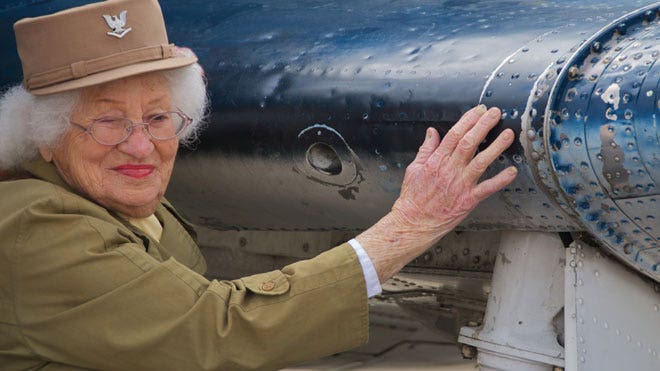
  • Bea-Cohen.jpg


    U.S. Army Private Bea Cohen  
Anyone who lives long enough is certain to witness something significant, and for centenarian Bea Cohen of Los Angeles, not only did she see air strikes during World War II--Cohen watched the Allied airplanes en route to the shores of Normandy in support of the D-Day invasion, 68 years ago today.
It's a life experience for the 102-year-old veteran that is as sharp in her mind today as it was in front of her face that early morning in England.
"Imagine all of those planes and gliders," Cohen recently recalled. "Loads of them!" She was a U.S. Army private on a train towards her new post when the dark sky erupted with the thunderous roar of motors.
"It was top secret. Nobody knew even aboard ship nobody knew when or where or what. And there were the planes--the sky was filled with planes and gliders. The Normandy invasion we knew that was the beginning of the end of World War II."
The war in Europe would end eleven months later and Cohen would soon return to her adopted home in Southern California. After the war she married a Marine named Ray Cohen, who was a prisoner of war in the Philippines. They spent the subsequent decades, as she does now, helping fellow veterans.
"Are you ready? You may not need it now. But you're going to need it later," Cohen exclaims to a wheelchair-bound visitor while presenting him with a hand-sewed blanket. It's a passion of hers to make sure that veterans--especially those with missing limbs--have blankets to help keep them warm. "At first I said, 'would you like to have a blanket?' They thought I was selling it. Now, I've got to say, 'I have a gift for you,'” Cohen explained from the state veterans facility she regularly visits. She still lives on her own.
The former Bea Abrams was born in Romania in 1910 and readily recalls the time planes flew into her hometown to bomb the local factories. It was World War I. She says the adults around her were surprised at how low the planes were flying. "And we stood there and waved. And the pilot waved back to me. He had a moustache."
Cohen immigrated to the U.S. in 1920, settling first in Fort Worth, Texas before moving to Southern California. At the start of World War II, she took a job with Douglas Aircraft helping to crank out planes. She was a real-life Rosie the Riveter. "I went to school in Inglewood to learn all about rivets. Roundhead rivets, little rivets, big rivets, flathead rivets [and] how to use a gun. And they sent me to work at Douglas in Santa Monica."
All of these years later, Cohen can still sing the refrain of "Over There," which was a popular American tune during both world wars. She'd sing with her fellow riveters to help pass the time. But the call to serve her country led Cohen to join the Army even though Douglas offered her a nickel an hour raise to stay home. She went through basic training, learned how to use a rifle and even did a stint on the task that no soldier likes--kitchen patrol. That prepared Cohen for her assignment in England and the unlikely position to witness history.
Over the years each would find ways to help their fellow veterans. "[T]here's a Jewish word called mitzvah m-i-t-z-v-a-h, which means always do a good deed every day," Cohen explained. "There's always someone who needs a little more than you do. So you share."
For many years that meant teaching upholstery to veterans and then using the leftover material to create the blankets that she'd then pass out. Cohen taught the classes until last year when her failing eyesight finally caught up to her. But she still makes the blankets and can't pass up the chance to let her hands examine a chair to judge the quality of its covering.
Always looking to help in any way she can, Cohen is a regular volunteer at a weekly bingo game calling out numbers. She is also an unapologetic advocate for her fellow veterans. "I come from a country where there wasn't anything like [peace and freedom]. And I know the difference. And veterans are doing it....What I don't want people to forget--our men and women veterans; they've given a lot. Why forget it?"

Thursday, June 7, 2012

Obama spurns D-Day observance for third year in a row. Shabby!


Verne Strickland Blogmaster / June 7, 2012

Ngan/Getty


By KEITH KOFFLER, whitehousedossier.com  June 6, 2012

It’s D-Day and President Obama is hitting the beaches – of sunny California!

Instead of scheduling a brief event to mark the 68th anniversary of America’s brutal landing on the shores of Normandy, Obama is already on his way to San Francisco, where he will hold two fundraisers before moving on to Beverly Hills to stage two more.

Obama failed to mark D-Day with either a speech or a written proclamation both last year or the year before. He did give a speech in 2009, the 65th anniversary of the event.

First Lady Michelle Obama, who has made much of her “Joining Forces” campaign to support military families, also has nothing planned for D-Day. She’ll be in New York City for a fundraiser and then in Philadelphia to meet with campaign volunteers.

Obama’s failure to mark D-Day in any significant way is both a shame and a political mistake.

According to the Department of Veterans’ Affairs, two critical swing states – Florida and Pennsylvania, are among the top five states in terms of veterans’ population.

Within the top twelve are four others – Michigan, Ohio, Virginia and North Carolina – all states Obama desperately needs to carry.

Shoddy Pattern of White House Leaks Threatens Nation's Security


By Ronald Kessler
 
Newsmax.com, June 7, 2012
Share
 
 
Ronald Kessler reporting from Washington, D.C. — An accelerating series of leaks of classified information all have two things in common: They directly endanger national security, and the stories reporting on them paint President Obama as a hero.

News reports on Tuesday disclosed that the FBI is probing the leaking of information about a classified U.S. cyberattack program aimed at Iran’s nuclear facilities, but a close look at recent developments uncovers a broad and disturbing pattern of leaks of some of the nation’s most guarded secrets by the Obama administration.

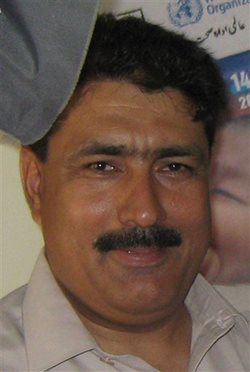
Dr--Shakil-Afridi.jpg
This photo taken on July 9, 2010 shows Pakistani doctor Shakil Afridi.
(AP Photo)
John Brennan, Obama’s counterterrorism chief, set the tone a year ago when he went on national television immediately after the killing of Osama bin Laden and gave a highly detailed account of the top-secret operation.

Defense Secretary Bob Gates, for one, was shocked.

“Too many people in too many places are talking too much about this operation,” Gates said, adding that the level of disclosures and blabbing violates an agreement reached in the White House Situation Room on May 8, 2011, to keep details of the raid private.

“That lasted about 15 hours,” Gates said with chagrin.

Then came disclosures that directly revealed secrets helpful to the enemy, that could endanger lives, and undermine trust by other countries and potential informants in U.S. intelligence operations.

Soon after the bin Laden raid, word began leaking to the press that a Pakistani doctor had helped the CIA operation.

In fact, Dr. Shakil Afridi reportedly provided critical intelligence on the location and identify of the al-Qaida leader. He had set up a fake vaccination program to obtain DNA during a visit by bin Laden.

Following the leaks, Afridi was arrested and on May 23 he was sentenced to 33 years in prison on a charge of conspiring against the state.

"The blame has been placed on my brother because of America," Shakil's brother Jamil told Fox News.

The protection of secret sources of the United States is not only good sense, it is vital for continuing operations and getting new sources that could improve our security and prevent the loss of American lives. But who will trust us if we leak sensitive information?
And critics of the Obama administration point to a pattern of leaks over a long period:
  • On May 9, The Associated Press reported that a CIA asset from Saudi Arabia had infiltrated al-Qaida in the Arabian Peninsula and thwarted a planned “underwear bomb” attack on an airplane bound for America. As a result of that disclosure, the asset had to be extracted and brought to the United States, possibly precluding opportunities for obtaining future inside information from within the terrorist group.
  • On May 29, The New York Times ran a detailed account of how President Obama directs U.S. drone attacks based on a classified “kill list” of terror suspects. The story rightly credited Obama with killing top al-Qaida leaders. Sen. John McCain has charged that the kill list leak was politically motivated.
  • On June 1, The New York Times ran a story revealing an alleged U.S. covert action program called Olympic Games, designed to thwart Iran’s nuclear program with computer virus attacks utilizing first the Stuxnet computer worm and later the Duqu malware. Thanks to the Times article, which cited U.S. government sources, details of the previously unknown operations are now public, including how the programs were supposed to operate and the involvement of Israeli intelligence. Up to that point, the possibility that the U.S. or Israel was behind the cyberattacks on Iran’s computers was pure speculation. In effect, the Times story provided Iran with a roadmap on U.S. efforts to defeat its nuclear bomb efforts.
  • Another front-page New York Times article in 2011 disclosed that the Obama administration had agreed to sell to Israel bunker-buster bombs capable of destroying buried targets, including suspected nuclear weapons sites in Iran.
The Bush administration had rebuffed Israeli requests for the bombs. But word of Obama’s sale to Israel came soon after Republican Bob Turner captured the U.S. House seat vacated by the resignation of scandal-marred Anthony Weiner in a Queens, N.Y., district with a large Jewish population.

Former New York City Mayor Ed Koch cited Turner’s election in a Newsmax column explaining why he had decided to back Obama for re-election in 2012. He referred to a New York Times article reporting that the United States had agreed to back Israel’s call for a return to negotiations with the Palestinians without preconditions, saying the agreement was “affected” by Turner’s win, and stating that “the president should be praised” for “providing the Israeli military with bunker buster bombs” — a clear reference to the Times story about the bombs that had the effect of bucking up Jewish support for Obama.

The leaks — which have accelerated as Obama’s re-election efforts have stumbled — have provoked bipartisan outrage.

“In recent weeks, we have become increasingly concerned at the continued leaks regarding sensitive intelligence programs and activities including specific details of sources and methods,” said a joint statement released by the top members of the Senate Intelligence Committee and the House Select Committee on Intelligence.

“The accelerating pace of such disclosures, the sensitivity of the matters in question, and the harm caused to our national security interests is alarming and unacceptable,” said the statement from Sens. Dianne Feinstein, D-Calif., and Saxby Chambliss, R-Ga. — the chair and ranking Republican on the Senate Intelligence Committee — and Reps. Mike Rogers, R-Mich., and C.A. “Dutch” Ruppersberger, D-Md. – the chair and ranking Democrat on the House Intelligence Committee.

“These disclosures have seriously interfered with ongoing intelligence programs and have put at jeopardy our intelligence capability to act in the future. Each disclosure puts American lives at risk, makes it more difficult to recruit assets, strains the trust of our partners, and threatens imminent and irreparable damage to our national security in the face of urgent and rapidly adapting threats worldwide.”

Republican Rep. Peter King of New York, chairman of the House Homeland Security Committee, told the New York Post that the leaking of vital secrets reflects an “amateur hour” style of management at the White House.
“It’s a pattern that goes back two years, starting with the Times Square bomber, where somebody in the federal government, probably the FBI, leaked his name before he was captured,” he said.

“They mentioned we had DNA, which is how the Pakistanis focused on the doctor they arrested.

“It puts our people at risk and gives information to the enemy. And it gives our allies a reason not to work with us because what they do might show up on the front page of The New York Times.”

Sen. John McCain of Arizona, the top Republican on the Senate Armed Services Committee, directly accused the Obama administration of leaking sensitive intelligence information to make Obama look good.

“This is the most highly classified information and it has now been leaked by the administration at the highest levels of the White House. That’s not acceptable,” McCain said on CBS, referring to several of the recent stories.

White House Press Secretary Jay Carney rejected McCain’s claims.

“This administration takes all appropriate and necessary steps to prevent leaks of classified information or sensitive information that could risk ongoing counterterrorism or intelligence operations,” Carney told reporters.

“Any suggestion that this administration has authorized intentional leaks of classified information for political gain is grossly irresponsible.”

By inserting the phrase “for political gain,” Carney avoided denying outright that Obama had authorized the leaks. Obama could have authorized the disclosures without admitting to himself that his intent was to help him win re-election. In that case, since the president can declassify information, the disclosures would not technically be considered leaks — but they would be just as harmful.

The FBI has begun an investigation of at least two of the leaks. In addition to the probe of the cyberattacks against Iran, FBI Director Robert Mueller disclosed on May 16 that the bureau has launched an investigation into who leaked information about the al-Qaida “underwear bomber” plot to place an explosive device aboard a U.S.-bound airline flight.

Overlooked in most of the coverage is the role of the press. When Valerie Plame was exposed as a CIA operative, the press turned the disclosure into a scandal and blamed the George W. Bush administration. Plame was technically undercover but not in any danger.

Yet The New York Times ran 521 stories suggesting it was wrong for the White House, and specifically Karl Rove, to divulge her name. Only 27 of the articles mentioned the person who actually leaked her name to columnist Robert Novak, former State Department official Richard Armitage, who ironically was critical of the Bush administration.

In contrast, the press now is silent on leaks that genuinely impair national security and whether the Obama White House is behind the disclosures. Nor are journalists examining the legitimacy of publishing such information in the first place.

It’s one thing to disclose classified information to expose an abuse — meaning an illegal act for political or otherwise improper purposes.

It’s another to disclose secrets for the sake of revealing secrets, when agencies are doing their jobs properly and when uncovering how they perform them prevents them from carrying out secret operations in the future.

The U.S. won World War II in part because America could intercept and decode German and Japanese military transmissions. That remained a secret until long after the war was over. Back then “loose lips sink ships” was the operative slogan.

If another major terrorist attacks occurs because foreign intelligence services and potential assets no longer want to risk cooperating with the CIA, papers like The New York Times will be the first to condemn the intelligence agencies for failing at their mission.

In their joint statement, the congressional leaders said they plan to “press the executive branch to take tangible and demonstrable steps to detect and deter intelligence leaks, and to fully, fairly, and impartially investigate the disclosures that have taken place.”

In particular, Sen. Dianne Feinstein, a California Democrat, called for Capitol Hill hearings about the cyberattack leak.

“I am deeply disturbed by the continuing leaks of classified information to the media, most recently regarding alleged cyber efforts targeting Iran’s nuclear program,” Feinstein said.

“We plan to move legislation quickly, to include possible action in this year’s intelligence authorization act,” the lawmakers said. “We believe that significant changes are needed, in legislation, in the culture of the agencies that deal with classified information, in punishing leaks, and in the level of leadership across the government to make clear that these types of disclosures will not stand.”

Said Rep. Ruppersberger: “These leaks can be dangerous to our country, they can hurt us with our allies, and they could have very serious consequences. They’ve got to be stopped."

Ronald Kessler is chief Washington correspondent of Newsmax.com. He is the New York Times bestselling author of books on the Secret Service, FBI, and CIA. Read more reports from Ronald Kessler — Click Here Now. 
© 2012 Newsmax. All rights reserved.
Share:
More . . .
   Email Us   |
   Print   |

Wednesday, June 6, 2012

D-Day medic still haunted by 'the boy on the beach'

Verne Strickland Blogmaster:

HOW MANY PERSONAL MEMORIES SUCH AS THIS -- LOST IN DEATH ON THE BEACH OR IN THE YEARS TO FOLLOW -- TELL THE TRUE HEARTRENDING STORIES OF VALOR THAT THIS BATTLE CREATED ON A DAY WHEN AMERICA WAS SAVED?

 By

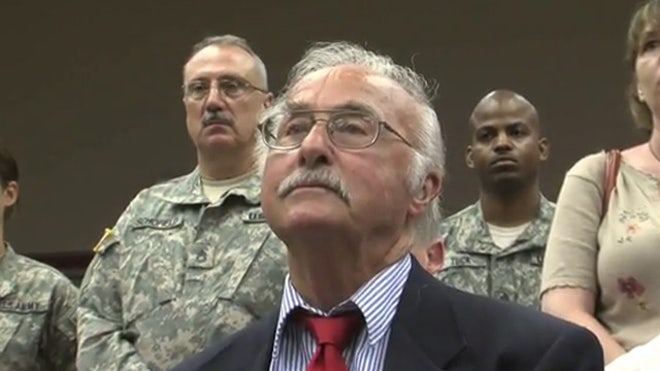
    friedenberg.jpg


  • Seen here at a 2009 event honoring New Jersey veterans, Bernard Friedenberg, a 90-year-old World War II medic who took part in the D-Day invasion, visited a local school in Atlantic City on Tuesday to commemorate its 68th anniversary, sharing his experiences with students who hung on his every word. But he will otherwise not mark the day in which he “lost so many friends,” he said. (YouTube)

The passage of 68 years has not dimmed Army medic Bernard Friedenberg's memory of "the boy on the beach."

Friedenberg was just 22 when he took part in the storied invasion of Normandy, hitting Omaha Beach with the 16th Regiment of the 1st Infantry Division, or “The Big Red One” on June 6, 1944. Moments after reaching the heavily-fortified French coastline, and as Nazi artillery rained down from the cliffs above, Friedenberg found a young, mortally-wounded soldier gasping his last breaths.

“He was shot through the chest and as he would breathe, the air would blow out of his chest, so I had to seal off the wound,” Friedenberg told FoxNews.com. “At the same time, I was hearing ‘medic, medic,’ from other soldiers. It was a massacre, an absolute massacre, and I was in the middle of it.”
Faced with the dilemma of continuing to treat the wounded soldier or turning to others, Friedenberg gave the soldier morphine and moved on. It’s a decision that still haunts the 90-year-old New Jersey man long after the invasion that allowed the Allies to gain a foothold in Normandy and begin the march across Europe to defeat Adolf Hitler.

“It was really rough,” he said. “I have some terrible memories. I was patching up guys right and left, on all sides of me.”

More than 5,000 ships and 13,000 aircraft took part in the D-Day invasion, which Gen. Dwight Eisenhower called a crusade that necessitated “nothing less than full victory.” By day’s end, more than 9,000 Allied soldiers were killed or wounded. But more than 100,000 soldiers survived, including Friedenberg, who would eventually trek through England, Algeria, Tunisia, Belgium, Germany and Czechoslovakia, earning two Purple Hearts, two Bronze Stars and two Silver Stars along the way.
"I lost so many friends on that day. God only knows how I came through without getting hit. But I did get through."
- WWII medic Bernard Friedenberg
Friedenberg, of Margate, N.J., visited a local school in Atlantic City on Tuesday to commemorate the anniversary, sharing his experiences with students who hung on his every word.
“The day is very significant to me,” he continued. “I lost so many friends on that day. God only knows how I came through without getting hit. But I did get through.”
Friedenberg, as a way of treating his post-traumatic stress disorder — "they called it 'shellshock' in those days" — chronicled his experiences as a near-sighted soldier who nearly wasn’t accepted into the service to his return to Normandy on his 80th birthday. The book, “Of Being Numerous: World War II As I Saw It,” published by Stockon College’s Holocaust Resource Center, is now mandatory reading at area college courses on the war, he said.
Despite the book’s near-universal praise for its candor and humor, Friedenberg does not enjoy recounting his war stories.
“He still gets nightmares, and he thinks back to the men he couldn’t save,” Friedenberg’s wife, Phyllis, told FoxNews.com.
“I have scars on my body, and scars in my head as well,” he said. “They will never heal.”
Other soldiers interviewed by FoxNews.com who took part in the D-Day invasion, including Rufus Broadaway, a paratrooper with the 82nd Airborne Division, recall the day in a much different light.
“I had forgotten that [today] is D-Day,” Broadaway told FoxNews.com when reached in Gainesville, Fla. “We don’t have any plans but to have our flag on our lawn.”
Sixty-eight years ago today, Broadaway leaped from his "hit" plane from the lowest altitude he had ever jumped — maybe 300 feet, he said — and landed on an apple tree.
“The roadway was covered with debris, a lot of dead bodies, injured soldiers, and soldiers so petrified that they couldn’t even move,” Broadaway said. “The air was full of shots and shells. But my captain had us going along. It was a miracle that we got across that causeway. By that time, the Germans had retreated.
“I wouldn’t take anything back,” Broadaway continued. “I will forever be proud of it and hold that experience close. I’m so thankful that I was a part of it.”
FoxNews.com's Maegan Vazquez contributed to this report.

Tuesday, June 5, 2012

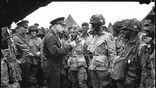
D-Day June 6, 1944 -- The Greatest Generation started killing Nazis in perhaps our greatest victory.


D-Day

This section of the World War II History info guide is devoted to "Operation Overlord," the Allied invasion of Nazi-occupied Europe that began on D-Day -- June 6, 1944 -- on the beaches of Normandy, France.

American soldiers landing on the coast of France on D-Day.
Click here for a larger version, or click here to send this as an e-card.


D-Day Introduction

June 1944 was a major turning point of World War II, particularly in Europe. Although the initiative had been seized from the Germans some months before, so far the western Allies had been unable to mass sufficient men and material to risk an attack in northern Europe.
By mid-1944 early mobilization of manpower and resources in America was beginning to pay off. Millions of American men had been trained, equipped, and welded into fighting and service units. American industrial production had reached its wartime peak late in 1943. While there were still critical shortages -- in landing craft, for instance -- production problems were largely solved, and the Battle of the Atlantic had been won. Ever increasing streams of supplies from the United States were reaching anti-Axis fighting forces throughout the world.
By the beginning of June 1944, the United States and Great Britain had accumulated in the British Isles the largest number of men and the greatest amount of materiel ever assembled to launch and sustain an amphibious attack. Strategic bombing of Germany was reaching its peak. In May 1943, the Combined Chiefs of Staff had given high priority to a Combined Bomber Offensive to be waged by the Royal Air Force and the U.S. Army Air Forces. By late summer 1943, Allied bombers were conducting round-the-clock bombardment of German industry and communications. In general, British planes bombed by night and American planes bombed by day. Whereas an air raid by 200 planes had been considered large in June 1943, the average strike a year later was undertaken by 1,000 heavy bombers.
After considerable study strategists determined to make the cross-channel attack on the beaches of Normandy east of the Cherbourg Peninsula. Early objectives of the operation were the deep-water ports at Cherbourg and at Brest in Brittany.
Three months before D-Day, a strategic air campaign was inaugurated to pave the way for invasion by restricting the enemy's ability to shift reserves. French and Belgian railways were crippled, bridges demolished in northwestern France, and enemy airfields within a 130-mile radius of the landing beaches put under heavy attack. Special attention was given to isolating the part of northwestern France bounded roughly by the Seine and Loire Rivers. The Allies also put into effect a deception plan to lead the Germans to believe that landings would take place farther north along the Pas de Calais.
Opposed to the Allies was the so-called Army Group B of the German Army, consisting of the Seventh Army in Normandy and Brittany, the Fifteenth Army in the Pas de Calais and Flanders, and the LXXXVIII Corps in Holland -- all under command of Field Marshal Erwin Rommel. Commander of all German forces in western Europe was Field Marshal von Rundstedt who, in addition to Group B, also had at his disposal Group G composed of the First and Nineteenth Armies. In all, Von Rundstedt commanded approximately fifty infantry and ten Panzer divisions in France and the Low Countries.
Despite unfavorable weather forecasts, General Eisenhower made the decision to attack on June 6, 1944. At 0200 that morning one British and two American airborne divisions were dropped behind the beaches in order to secure routes of egress from the beaches for the seaborne forces. After an intensive air and naval bombardment, assault waves of troops began landing at 0630. More than 5,000 ships and 4,000 ship-to-shore craft were employed in the landings. British forces on the left flank and U.S. forces on the right had comparatively easy going, but U.S. forces in the center (Omaha Beach) met determined opposition. Nevertheless, by nightfall of the first day, large contingents of three British, one Canadian, and three American infantry divisions, plus three airborne divisions, had a firm foothold on Hitler's "fortress Europe."
[Note: The primary source for this text is the U.S. Army Center for Military History.]


D-Day Features


The Bedford Boys' Ultimate Sacrifice on D-Day

Nineteen boys from one small American town — Bedford, Virginia — died in the first minutes of D-Day. In the new book "The Bedford Boys," Alex Kershaw tells the story that inspired the movie "Saving Private Ryan." This is an engaging excerpt.

The First Infantry Division on D-Day

Here is the story of the famous Big Red One on D-Day: how they got to Omaha Beach, and how they were tested there.

Afternoon on Omaha Beach

This is an e-text adapted from a section of Stephen E. Ambrose's book "D-Day: June 6, 1944: The Climactic Battle of World War II." In this section, veterans -- and Ernest Hemingway -- recount their personal stories of the afternoon on Omaha Beach. Ambrose also discusses his view of Hitler's D-Day mistakes and what Eisenhower did right.

Pointe-Du-Hoc

Point-Du-Hoc looks down on Utah Beach on one side and Omaha Beach on the other. In this selection from "The Victors," Stephen Ambrose recounts how Rangers were able to scale the 100-meter-high cliff at Pointe-Du-Hoc and knock out the German's deadly 155mm cannons.

Expanding the Beachhead

In this selection from "Citizen Soldiers," Ambrose reports on the critical days after D-Day -- June 7 to June 30 -- when the Allies fought to expand their beachhead one foot at a time.

What's the 'D' in D-Day stand for?

The short answer: nothing.

Heroes of D-Day

Fascinating, inspiring stories and details about the American heroes of D-Day who were recognized with the Congressional Medal of Honor.


D-Day Links


~
World War II history books World War 2 collectors buying guide World War Two posters and art Second World War collectibles and gift ideas World War Two history clippings, articles, essays World War II links directory World War II movies and music WWII public discussion forum World War Two quotations WWII e-cards World War II history home page
~

Governor Walker fends off recall effort.Don't mess wif' Wisconsin!

GOP victory a major blow to both Democrats and unions.

By Cameron Joseph - 06/05/12 09:58 PM ET 
 
Wisconsin Gov. Scott Walker (R) avoided being recalled Tuesday evening, a major blow to both Democrats and unions and a sign the state may be in play in the presidential election.

Walker defeated Milwaukee Mayor Tom Barrett (D), according to projections by the news networks and the Associated Press based on early results and exit polling. Walker had 58 percent of the vote to Barrett's 41, with 48 percent of precincts reporting.

The result is a huge letdown for organized labor, which made the race a top priority since Walker successfully pushed for an end to collective bargaining for state employees early last year.


Unions spent more than $10 million to try and defeat Walker, according to the independent Wisconsin Democracy Campaign, which tracked spending on the race. They were also the driving force behind the original push, leading efforts to collect the nearly 1 million signatures gathered in support of his recall.

Total spending on the race exceeded $65 million, and the Wisconsin Democracy Campaign’s Mike McCabe said once all the numbers are totaled that figure could exceed $75 million, doubling the maximum ever spent on any political campaign in the state.

That number was buttressed by a loophole in Wisconsin law that allowed Walker to raise unlimited donations from individuals for months, while Barrett had hard caps on his donations and could only begin fundraising two months ago when the recall became official. That allowed Walker to raise nearly $30 million and outspend Barrett by a nearly ten to one margin. Walker and his allies more than doubled the amount Barrett and his backers spent on the race.

The win increases Walker’s already-potent star power within the GOP. Some Republicans have floated his name as a possible presidential candidate in 2016, and Wisconsin Republicans have flocked to tie themselves to Walker ahead of the recall.

Walker’s win may lead to renewed tensions between President Obama and organized labor, who have had, at times, a contentious relationship. Obama stayed largely quiet on the recall and did not campaign in Wisconsin for Barrett despite being in neighboring Minnesota and Illinois in the last week, and his only comment on the race was a tweet sent Monday night.

Obama’s Wisconsin field operation did work with Barrett’s backers to turn out voters, the Democratic Governors Association spent heavily on the race. The Democratic National Committee spent $1.4 million there and DNC Chairwoman Debbie Wasserman Schultz (D-Fla.) stumped with Barrett last week, but a number of Walker foes criticized Obama’s lack of effort on the race.

Gerry McEntee, president of the American Federation of State, County and Municipal Employees (AFSCME) told The Hill last week that Obama and the national Democratic Party “could and should have done more” to help.

The GOP has grown increasingly bullish about their presidential election prospects in Wisconsin in recent weeks. The Republican National Committee sent out a background piece Tuesday afternoon detailing how President George W. Bush to came within one percentage point of winning the state in both of his elections and touting their 2010 successes, when they won the governorship, control of both statehouses, a Senate seat and two House seats.

Mitt Romney congratulated Walker on his victory Tuesday night and said the results "will echo beyond the borders of Wisconsin."

"Governor Walker has shown that citizens and taxpayers can fight back – and prevail – against the runaway government costs imposed by labor bosses. Tonight voters said ‘no’ to the tired, liberal ideas of yesterday, and ‘yes’ to fiscal responsibility and a new direction. I look forward to working with Governor Walker to help build a better, brighter future for all Americans," he said in a statement.

Democrats have similarly shifted their views on Wisconsin. After having the state in the “solid Democratic” category on his on Electoral College map for months Obama campaign manager Jim Messina moved Wisconsin into the “toss-up” category for the first time on Monday. He made the move in a campaign video that sought to assure supporters they would prevail in the fall.

Obama’s campaign downplayed the change, and some of the same polls that showed Walker with an edge heading into the recall had Obama leading Romney.

“The last public polling had President Obama up 8 [points] in Wisconsin, but we have always anticipated a close race and don’t take anything for granted,” a Obama campaign official told The Hill Monday evening.
Because of Walker’s built-in financial advantages some Democratic strategists had counseled early on against the recall. But Rep. Ron Kind (D-Wis.) told The Hill last week that the recall drive was going to happen whether or not Democratic insiders wanted it to.

“The recall was going to happen no matter what because of the very organic nature of it,” Kind said before adding he’d supported it from the start. “There's no way anyone could have stepped in and stopped the petitions from going out or the signatures from being collected. Clearly there was going to be a recall election regardless of whether any party folks had to say about it.”

--This story was posted at 9:58 p.m. and has since been updated.