Saturday, May 17, 2014

Troubled former candidate Will Breazeale back in the news. Story details here.

Saturday, February 2, 2013

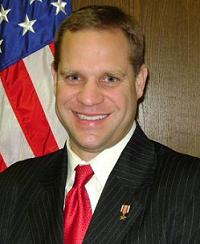
Will Breazeale leaves tragic trail of domestic turmoil through decade of court records

Troubled former candidate Will Breazeale back in the news -- this time in South Carolina!

By Verne Strickland / Politics /FEBRUARY 2, 2013


Will Breazeale is a candidate who is waging a spirited battle in the Republican primary for North Carolina’s Seventh Congressional District. I’ve gotten to know him over the past couple of months and I like him.

But Will is dragging around an anchor which will eventually take him down. He has a rap sheet that winds through a succession of serious scrapes with the law in Georgia and in North Carolina. A personal bankruptcy filing is recorded in South Carolina.

This bulky collection of court records about Will Breazeale weighs over five pounds. It is 2 ½ inches thick. The time line stretches over a decade, and it’s ugly. I’ve seen it. It will not hide or go away.

It’s not exactly common knowledge that this incriminating file exists. But many seem to know about it. It’s a volcano ready to erupt.

These papers are on public file at the Bladen County Courthouse in Elizabethtown, NC. Both civil actions and criminal proceedings are cited there. They chronicle a lurid personal history which includes references to intimidation, aggravated stalking, criminal trespass, larceny, threats of suicide, and even threats of murder directed by Breazeale at members of his own family.

Most of the incidents described are linked to his stormy relationship with his wife, from whom he is now divorced. The couple had one child.

Only one of these entries is offered here. It is the verbatim text of an official police report describing events said to have taken place on January 6, 1995, in Georgia.

The “complainant” is identified as Mr. Breazeale’s former mother-in-law. The “offender” is identified as William James Breazeale. The report was typed in all capital letters:


“COMPLAINANT STATED THAT OFFENDER SAID, ‘I’LL BLOW YOUR FxxxxxG HEAD OFF.’ AND COMPLAINANT STATED THAT ANOTHER STATEMENT THE OFFENDER MADE WAS ‘I’LL SHOOT EVERY DAMN ONE OF YOU AND AIN’T NOBODY GOING TO STOP ME.’ COMPLAINANT STATED THAT OFFENDER HAS CALLED HER DAUGHTER AT HER HOME TWO WEEKS AGO AND MADE THREATS TO HER DAUGHER (HIS EX-WIFE CHERYL BREAZEALE). COMPLAINANT ALSO STATED THAT OFFENDER HAS BEEN CALLING HER DAUGHTER (HIS EX-WIFE CHERYL BREAZEALE) AT HER JOB IN BRUNSWICK, GA. AND THAT HER DAUGHTER HAS FILED CHARGES ON OFFENDER WITH THE BRUNSWICK P.D. (on) THIS DATE FOR STALKING AND TERRORISTIC THREATS AND PLAN TO TAKE OUT A RESTRAINING ORDER ON OFFENDER. COMPLAINANT ADVISED THAT SOMEONE HAD CUT THE LOCK TO HER ELECTRICAL BOX OUTSIDE AND CUT HER LIGHTS OFF LAST FRIDAY 01/06/95. AND SHE BELIEVES THAT IT WAS THE OFFENDER. BECAUSE HE WAS ON THE PHONE. SHE STATED TO HIM ‘YOU THINK YOUR FUNNY BY WHAT YOU’VE DONE WITH THE ELECTRICITY AND SCARING YOUR DAUGHER’ AND HE STATED ‘I CAN BE ANYWHERE AT ANY TIME’. COMPLAINANT STATED THAT OFFENDER HAS A PILOTS LICENSE AND FLIES DOWN HERE AND RENTS CARS. SO SHE’S REALLY AFRAID. BECAUSE SHE DOESN’T KNOW WHEN HE’LL BE AROUND OR WHAT HE’S DRIVING IN. COMPLAINANT ALSO ADVISED THAT THERE IS A COURT ORDER STATING THAT OFFENDER IS REFRAIN FROM ANY HARASSMENT OF HER DAUGHTER AND THAT SHE BELIEVES OFFENDER HAS ACTIVE WARRANTS AGAINST HIM IN NORTH CAROLINA.”


There’s more, so much more, but this is more than enough. I don’t care to add anything else to this searing personal litany of despair.

It might be worthy of note that Ilario Pantano, the only other viable candidate in this primary, has been relentlessly taunted by the Breazeale camp, which mocks the exoneration accorded the young Marine officer in official Article 32 proceedings.

In my interview with Will Breazeale in the early days of this primary, he said: “Since the Marine general in their version of the grand jury indictment -- I think it’s called an Article 32 hearing -- chose not to prosecute him, he is innocent of criminal wrongdoing. I back him up on that.”

But there has been little evidence of this magnanimous gesture in public debates and other campaign settings. Strange that this lack of compassion and fairness toward a fellow member of the U.S. military should backfire like this.

Meanwhile, Ilario Pantano, who vowed to run a clean and honorable race, has held his tongue when the insults fly, and set an excellent example of how to live one’s beliefs.
   ***************************************

Look for a startling follow-up on Verne Strickland's blog as the Breazeale battleground shifts to Charleston, South Carolina. 

Friday, May 16, 2014

I am getting tired of this Pope. Francis is the Obama of the Vatican. I was at first impressed. Then ambivalent. Then doubtful. Wary. Disappointed. Shocked. And now just plain tired.


Verne Strickland / USA DOT COM / May 16, 2014

http://www.post-gazette.com/image/2014/03/27/obamaPope-int-1.jpg

Pope Calls for Sweeping Democrat Economic Takeover

Robert Rich

Despite the Pope insisting he is not Marxist on several occasions, it appears as though he does share some similar ideas with the political and economic theory – perhaps the most indicative of this is his desire for a redistribution of wealth.
On Friday, Pope Francis addressed the public and set his sights on making the world better for the poor. He went on to share that society has come to adopt an, “economy of exclusion,” in which the poor have been deemed second class citizens.
(See also: Pope Francis Confronts Rush Limbaugh And Other Conservatives Who Call Him A Marxist)
In order to combat this less than dignified reality, the Pope has called for a, “worldwide ethical mobilization,” in which the world pulls together in the name of charity in order to aide of the poor. Amongst his address, Francis shared, “I do not hesitate to state, as did my predecessors, that equitable economic and social progress can only be attained by joining scientific and technical abilities with an unfailing commitment to solidarity accompanied by a generous and disinterested spirit of gratuitousness at every level.”
He further mentioned, “A contribution to this equitable development will also be made both by international activity aimed at the integral human development of all the world’s peoples and by the legitimate redistribution of economic benefits by the state, as well as indispensable cooperation between the private sector and civil society.”
Although the Pope’s ideals are understandable, they may be more than a little unreasonable. As much of the world is not Catholic, has not promised everything – including their celibacy – unto God, it seems a bit absurd to expect the rest of the world to live in such a way.
(See also: Pope Francis Drops F-Bomb During Weekly Blessing)
In that, Francis had decried the mentality of Capitalism as he suggests that the greed in which drives such an economy is the direct culprit responsible for his aforementioned second class citizenry. There is no doubt the Pope knows of the contradictory nature in his lecture as the world has yet to operate on a standard basis as of this point – so why would they agree to all come together and adopt a worldwide redistribution of wealth to help the poor?
The Pope is making a valid point here – in that we as human kind have a duty to care for those who are less fortunate – but the way in which he’s suggesting we fix our broken society hardly seems a reasonable solution.

Sunday, May 11, 2014

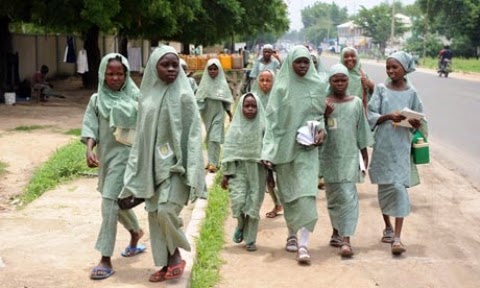
Kidnapped Nigerian girls are pawns in a Muslim war against Christianity. US media remain mute

The kidnapped Nigerian girls are Christian. Why doesn’t our media say so?

Nigerian schoolgirls


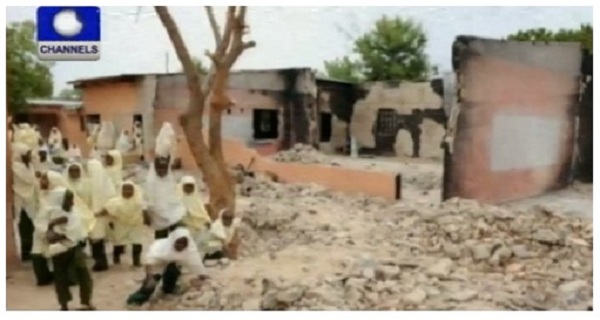
Gradually but explosively, what Boko Haram, the Islamist terror group, has been doing in North East Nigeria has penetrated the mainstream from the social media. On 14 April Boko Haram (meaning ‘Western Education is Forbidden’) abducted more than 230 girls from a boarding school. Most are still missing. Abubaka Shekau, Boko Haram’s leader, obligingly gave a videoed explanation: ‘I abducted your girls; there is a market for selling humans. Allah says I should sell – he commands me to sell.’

The fact that these are girls, at least, makes their plight of international political and media interest. Feminism is an easy fall-back position for the foreign policy/human rights community. For that, the girls and their parents may yet have reason to be grateful. It allows the British Foreign Secretary to tweet that ‘using girls as the spoils of war and the spoils of terrorism is immoral’. But what neither the UK nor the US authorities is prepared to draw attention to is that these girls – all or nearly all of them – are Christians.

It is believed that at least 180 of the girls are Christian.

Boko Haram might, indeed, abduct Muslim girls from school because it thought they should be back at home, to be covered up, beaten, and to make the soup. But it would only dare to sell Christians into slavery and prostitution. Not only are they Christian. It is their Christianity which caused them to be victims.

These and other abductees were at schools in the Christian enclave of Chibok in Borno State. The region is the scene of systematic Islamist persecution and intimidation. Chibok, itself, was regarded as safe, until Islamists arrived to burn down the market, destroy houses, steal, kill, and abduct at will. Full, credible, detailed accounts are available through the Christian on-line networks.

Yet commentators still seem content to exercise self-censorship. The religious identity of the girls has not been mentioned in the mainstream US or British media.

The words ‘poverty’, ‘corruption’, and ‘incompetence’ figure largely, and with some justice, in explanations of what is dysfunctional in Nigeria. But the word “Christian’ is notable by its absence in explaining what happened in Chibok.

Nigeria is, in truth, the scene of a brutal religious war being fought by jihadists against Christians. But don’t expect the White House or Downing Street, let alone Foggy Bottom or the FCO, to own up to it.

source: The Spectator

Thursday, May 8, 2014

Obama's Key Message in Asia: If China Wants a Fight, We've Got Your Back


Obama's Key Message in Asia: If China Wants a Fight, We've Got Your Back

By Ashok Sharma

Barack Obama’s weeklong visit to Asia took in Japan, South Korea, Malaysia and the Philippines. His trip was supposedly focused on economic issues and in particular on enhancing trade links across the Pacific. But in the end strategy, and particularly defence, was most prominent. The visit must be seen in the context of the never ending struggle for regional balance between the great powers.
Obama’s “Asia pivot” over the past two years was two-fold. On the economic front it meant rejuvenating the negotiations on the Trans-Pacific Partnership (TPP). And on the strategic front it meant counterbalancing Chinese military expansion through defence cooperation with other countries in East Asia.
Progress on TPP has been slow; negotiations are likely to drag on throughout the year. It seems even a presidential visit couldn’t speed things up.
But on the defence front Obama has been more assertive, not missing the chance to clarify US strategic objectives in the region. The best way to identify the strategic motive behind his visit? Look for the glaring hole in the itinerary: China.
It is easy to see why, for America, China represents not just an economic rival but also a military worry. Its defence expenditure has doubled in the last decade: only the US now has a larger defence budget.
This has spurred a regional arms race, with Vietnam and the Philippines among the countries increasing their budgets. Even Japan has reversed its declining defence spending, following tension with China last year. Asia-Pacific is the only part of the world where defence expenditure has continued to rise since 2009.
For the US, the stakes are high. Japan and South Korea, its two major allies, are both under the US security umbrella and yet both face nuclear armed rivals: China and North Korea.

Island standoff

Japan’s uneasy relationship with China has been aggravated by a standoff over a group of small islands claimed by both countries. Prime minister Shinzo Abe has boosted the defence budget and ensured his military is more prepared for a possible war. He has also attempted to force defence partnerships with China-wary countries in the region such as the closer military ties with India.
During his visit Obama encouraged Abe to look for a peaceful and diplomatic solution to the island dispute. But on the other hand he clearly stated the disputed territory falls within the area covered by the US-Japan Security Alliance and that the US would protect it. Apparently America is no mood to retreat.
This firm stance has been noticed and replicated elsewhere in the region, where those nations who depend on the US for security have been looking at China’s military and feeling increasingly anxious. Obama sent out another reassuring signal by visiting South Korea amid heightened activity at North Korea’s nuclear test site. And what about the Philippines? It’s also involved in a territorial dispute with China, and it has every reason to feel increasingly nervous. There, US just signed a ten-year defence agreement.
If this all means action rather than merely words, it represents a welcome shift in US foreign policy. Despite Asia-Pacific’s obvious strategic and economic importance, policy towards the region has appeared muddled.
This perception has been further reinforced by US involvement in the Middle East, Afghanistan & Pakistan, the ongoing Syrian crises and the latest stand-off with Russia over Ukrainian. No country can be everywhere at once. Not even the US. Dealing with crises elsewhere in the world has meant diverting its diplomatic and strategic resources away from Asia-Pacific.

Balancing power

But Obama’s very first stop in Japan, where he reaffirmed the importance of the US-Japan Security Alliance, suggests that US is motivated by maintaining a balance of power in the region. The last thing America wants is for China to become the dominant military power.
Officials in Beijing were paying attention. China’s state run daily has indeed concluded that the US president’s visit was aimed at containing China. Obama himself disagrees with this assertion, but his visit is a clear indication that the US does not want to leave any doubt among its Asian friends that the US is weak or might roll back from the region.
The US may face challenges on many fronts, but China remains the key rival. It is, after all, the only inevitable great power of the 21st century. History suggests that hegemons have never given up, and Obama’s Asian trip was an expression of the US' power balancing strategy in this crucial region.
Ashok Sharma does not work for, consult to, own shares in or receive funding from any company or organisation that would benefit from this article, and has no relevant affiliations.
This article was originally published on The Conversation. Read original article.
(AP Photo)

The Conversation
Sponsored Links
Related Articles
April 22, 2014
Obama Visit to Asia Seen as Counterweight to China - Elaine Kurtenbach
April 23, 2014
A Tough Week for Obama in Asia - Elsina Wainwright
May 1, 2014
Why East Asia Alienates Intellectuals - Robert Kaplan
Ashok Sharma
Author Archive

MORE FROM THIS AUTHOR

Tuesday, April 29, 2014

Verne Strickland -- 'Wounded Warrior' fights with words in NC political trenches

'Wounded Warrior' fights with words in NC political trenches. 

Thom Tillis
thom tillis

By Verne Strickland, Wilmington NC
April 29, 2014

This political season, though exciting and always challenging, has called for a different strategy from me. I've had to go from hand-to-hand fighting to sniper. But I've managed.

The previous campaigns I was in focused on Ilario Pantano's battle to wrest the NC seventh district congressional seat from wily long-term incumbent Mike McIntyre.

That was trench warfare at its best. Two great candidates and their field troops slugging it out in a match-up that never went slack. Back then I had everything going for me. At the top of my game. Mind agile and keen. Endurance aplenty, driven by a commitment to pull out a victory. I could go night and day, travel where I was needed, network with Ilario's talented political troops in the field, and keep the pressure on Congressman McIntyre and his Democratic team.

We fought hard, but suffered a loss that was hard to take. I say "we", though I had no official role in those campaigns. I participated as an independent commentator and conservative critic. Still, I felt confident I had given my all, and so had a modicum of pride in spite in the outcome.

For me personally, though, this time, covering Thom Tillis, there was a huge difference in what I had to fight with. I had suffered health problems over the last few  years -- the most serious being a full-fledged assault from multiple myeloma -- bone cancer -- which sapped my strength, brain power, creative skills, and roving ability.

This time I could hardly walk.

Travel was almost out of the question. I needed lots of rest. I was prevented from attending meetings, strategy sessions, news conferences -- anywhere players in the campaign gathered. I was pretty much grounded.

The only way I could cope and stay in touch was by corresponding, chatting, interviewing, researching, using my own devices, and hunting from a distance when I was going after vital news, changing trends, and the like.

I became a sniper -- stationary, but lethal nonetheless.

When I was assembling a piece on Thom Tillis, which I did numerous times, I depended on my interviewing skills, gained by years in professional broadcasting, to get information. Interviews -- rather than being face-to-face, were always done remotely -- via telephone hook-up or the Internet. Trusted sources were more useful than ever, as I was virtually nailed down at my home office on Castle Street in Wilmington.

You miss the feel of a gathering when it's like this. You are denied the use of your hand-held microphone, from  a close-up vantage point that offered expressions -- nervousness, brash cockiness, or an air of confidence, from the person on the hot seat.

I always enjoyed being right in the ring, where I could get the full feel of the setting and its dynamics. I didn't have that this time. I let my imagination go hunting, pictured the scenes in my mind, and used action vocabulary to paint the picture in words. I received enough generous compliments to know I wasn't failing.

Most of that action was during Thom Tillis' drive to win the primary. He's strong, honorable, confident, with great leadership qualities, so the interviews were substantive and effective, I thought, even though recorded via telephone or transcriptions captured via television and cable.

At this time in late April, Thom appears to have the GOP intramural scrap in his possession, though this is certainly not assured at this point. That is very gratifying to me. I feel vindicated. I'm an old war horse who manages to cope despite handicaps. I'm 77, and may be used, but I ain't used up.

My support of Thom was never limited to presenting his positions amidst the vagaries of an intense political battle. He avoided negative approaches. I was obliged, though, to divulge deliberate and false claims from liberals -- distortions and prevarications that found their way into the gritty verbal battles. There are instances of each of these tactics in any contest -- on the field of battle between armies, or in a tense political campaign.

While I was not linked to Thom Tillis in any official capacity, I worked as hard and as effectively as I could under the circumstances. I believed in his honor, his character, and his strength of leadership. I believe I may have contributed in a positive way to the campaigns. And I am grateful to God for the opportunity to take part.

I did it for the Republican Party, Christians and conservatives, the State of North Carolina, and the United States. From the sidelines I gave what I had to give, and loved it. This is my passion. While walking is a struggle, I stayed at my post. In a way, I pride myself as being a Wounded Warrior.

This primary will not be settled at least until May 6. In the event of a run-off, it will go beyond that.

Then, it is my hope, prayer and anticipation that Thom Tillis, will do North Carolina the honor of becoming the new U.S. Senator from our great State. We are overdue for a change.


Sunday, April 27, 2014

VERNE'S 'ONE THING MORE' A CHRISTIAN TESTIMONY

(Written about four years ago. Published in 'About.com  Christian Testimony')
Re-posted USA DOT COM April 28, 2014

Verne's One Thing More

Christian Testimony of Salvation

Verne is in his early seventies. He's been blessed with a wonderful wife of nearly 50 years, three sons and a grandson. He's happy with the good things in his long life, but there's one thing more that means everything to Verne, and that's why he's sharing his story. He wants you to experience the same assurance he has come to know through everlasting life in Jesus Christ.
Verne's story is one of many uniquely featured testimonies from you, the members and visitors of this site. Each story reveals a life transformed by Christian faith. If your relationship with God has made a significant difference in your life, we would like to hear about it. Submit your testimony by filling out this Submission Form. To receive weekly messages of hope and encouragement from real-life stories of changed lives, sign up for eTestimonies.

Verne's One Thing More

So, God doesn't speak to you? Think again, friend. He will and he does.
I write this as I sit in my little home office looking down on a brick paved street in the North Carolina coastal community of Wilmington. If I live a few more weeks, I will celebrate my seventy second birthday next month.
I think I will, but God tells us not to boast of the future, but to appreciate the present. I abide by that. I have been blessed with a wonderful wife to whom I have been married for 49 years. Further, I'm blessed by three wonderful sons and a lovely grandson as well. And I live free in America. I can walk and my eyes can see.
Is that enough? Well, there’s one thing more, but I'll get to that later.
First, to the question, does God speak to us? What shall we expect—that the Creator and the Lord of us all will reach out to each and every one of us individually?
Well, he does have a message—correct that, many messages—for each of his children. And those messages stream to us throughout our lives.
But can we be content with a spiritual e-mail blast that is free for the asking and no less personal?
When we pass an outdoor advertising sign on the interstate, is it less meaningful to us because others see it as well? I don’t think so.
You need to know that when you plug in to the Almighty, you've got a private line! He’s got your number, and he will hear you and respond.
So dial into God! Be assured that he knows who you are, what you experience, what you need, what you feel. Why not? He created you.

A Personal Word for You

The Holy Bible—his Word—is there for you, personally: “For I know the plans I have for you, declares the Lord, plans to prosper you and not to harm you, plans to give you a hope and a future." (Jeremiah 29:11, KJV) Ah, that’s so beautiful. It knocks me out.
God's Word. Find it, friend. Read it. I have and I think it’s wonderful. God tells me he loves me, personally. He envisioned and formed me. He chose me. He beckoned me. He has saved me through the precious blood of His Son, Jesus Christ.
But I am not favored over any other, and I don’t need or expect that. We are all his children, if we profess our faith in our Redeemer and Advocate, Jesus, bless him.
You can have the same blessed assurance that I have. There is no greater gift, believe me. Rather, believe God the Father, God the Son and God the Holy Ghost.
And now I've returned to the "one thing more" that I mentioned earlier—a blessing so profound that I pray I can have some understanding of it—everlasting life through the forgiveness of Jesus Christ, through his death and atoning resurrection.
I am not worthy. Nothing I have ever done or will ever do will make me worthy. But God the Father gave us his son Jesus, and we are kept safe in Christ until the Lord returns and delivers us whole and redeemed to the Father.
What?
Yes, it’s true. “I have chosen you out of the world,” God says in the John 15:19. Chosen you? Yes, to be his own, and to share his glory in the hereafter.

A Promise

Finally, listen to this promise: “Let not your heart be troubled. Ye believe in God, believe also in me. In my father’s house are many mansions. If it were not so I would have told you. I go to prepare a place for you. And if I go and prepare a place for you, I will come again, and receive you unto myself, that where I am, there ye may be also.” (John 14:1-3 KJV) It touches and warms my heart to write these things to you. It’s always wonderful to praise God and pronounce him Lord of all.
Friend, I am a sinner, but forgiven of all transgressions past, present and future. I know it. I believe it. And you have the same promise and blessing if you profess and receive Christ as your Savior, mediator and advocate.
Just one thing more, I pray you will receive him.

Saturday, April 26, 2014

The Holocaust of World War II will always be news.


I started down this track tonight after seeing a piece somewhere about the "holocaust" -- not an entirely new subject for a writer with 50 years of news coverage under my belt. The subject has always riveted my attention.

It is the quintessential example of "man's inhumanity to man" -- so audacious, horrid and cruel as to be even be doubted -- even though there is massive evidence of its existence. The first photos I saw of the holocaust came from World War II "Life" magazine coverage. My father was subscriber to a number of news, human events, geography and nature publications, all of which I devoured. I'm certain this exposure to the leading news journals of the day directed my path into writing, photography, broadcasting and journalism. And so came the holocaust into my world.

Resource: Wikipedia

The Holocaust is generally regarded as the systematic, state-sponsored persecution and slaughter of approximately 6 million Jews u0097 two thirds of the total European Jewish population, and two-fifths of the Jews in the entire world u0097 but also millions of other victims, by the Nazi regime and its collaborators under Adolf Hitler.
While the Jews were the primary target, there were many other ethnic, secular, religious, and national groups that suffered during the Holocaust, including Poles, Czechs, Greeks, Gypsies, Serbs, Ukranians, and Russians, as well as homosexuals, mentally and physically handicapped persons, trade unionists, prisoners of war, Jehovah's Witnesses, and uncounted others. All were targeted because of their perceived "racial inferiority."
The roots of Hitler's hatred
Disagreements persist about the precise origins of Hitler's anti-semitism. His hatred of the Jews was so unrelenting that the political testament he signed on April 29, 1945 u0097 just one day before his suicide and fewer than 10 days before German surrender u0097 ended by ordering "the government and the people to uphold the race laws ... and to resist mercilessly the poisoner of all nations, international Jewry." As early as 1919, in his first definite anti-Jewish writing, Hitler stated that "rational anti-semitism must lead to a systematic legal opposition and elimination of the special privileges which Jews hold... Its final objective must unswervingly be the removal of the Jews altogether."
Modern anti-semitism in Germany was boosted in the 1880s when an influential nationalist historian, Heinrich von Trietschke, published a series of articles in which he wrote, "The Jews are our misfortune." That slogan would later be written on banners at Nazi rallies. Another anti-Jewish German writer, Wilhelm Marr, coined the term anti-semitism.
Anti-semitism was not unique to Germany. Hitler was only exploiting anti-semitic feelings that had been endemic in Europe for centuries. Germany was in terrible shape economically after World War I, and Hitler and his ideals made it easy for the German people to lay the blame on one particular group. Hitler led many to believe that the Jews had been the source of defeat during the war, as well as for the economic depression during the 1930s.
At the heart of Hitler's political creed stood the ideal of racial purity. Above all else, German, or "Aryan," blood must be kept vital and strong. Neither Hitler nor any of his contemporaries was the first to practice what has sometimes been called "the longest hatred." Hitler was born into a world, and into an environment, in which anti-semitism was already present. His time spent in Vienna, Austria, as a young man, fueled his notions of racial superiority.
Hitler joined, and soon became the leader of, a small right-wing political group that called itself the National Socialist German Workers Party (Nazi). The Nazis attempted to take over the German government in November 1923, but were unsuccessful, and Hitler received a five-year prison sentence for his involvement in the uprising. He served nine months of his sentence in a suite of rooms at the prison, during which time he wrote Mein Kampf (My Struggle), which declared that some races create civilization and others corrupt it. By 1945, his book had sold more than 6,000,000 copies.
The Nazis gained in popularity as Hitler promised a better life for the German people. By 1932 the Nazis were the largest political party in Germany. They soon gained total control, and called their state the Third Reich. Hitler's speeches u0097 typically delivered from rough notes and sometimes lasting two hours u0097 drew crowds that often numbered in the tens of thousands.
Hell on Earth
In 1933, the Jewish population of Europe was more than 9 million. Most European Jews lived in countries that the Third Reich would occupy, or at least influence, during World War II. By 1945, close to two out of every three European Jews had been killed as part of the "Final Solution," or the policy to slay all the Jews of Europe.
The Holocaust had essentially been underway since the enactment of the 1935 Nuremberg Race Laws, which proclaimed Jews to be second-class citizens and excluded German Jews from Reich citizenship, as well as prohibited them from marrying or having sexual relations with persons of "German or related blood." German Jewish athletes were not allowed to participate in the 1936 Olympics.
Juden patch
As soon as Hitler became chancellor of Germany in 1933, he implemented his scheme to conclude the struggle between the "master race" and the "inferior races." Anything in the media that opposed the Nazi Party was censored and removed. All forms of communication, whether newspapers, magazines, books, art, music, or radio, were controlled by the Nazis.
Soon, laws were instituted against Jews that forced them out of public life u0097 civil service jobs, university positions, and numerous others. Jewish businesses were boycotted, and all Jews were compelled to label their exterior clothing with a yellow Star of David with the word "Juden" (Jew).
Eventually, Jews were more and more segregated, until finally, they couldn't go to public schools, theaters, or resorts, and were even banned from walking in certain parts of Germany.
When World War II erupted on September 1, 1939 and Germany gained victory over Poland, the Nazis began to enslave the Poles and destroy their culture. The first step was to eliminate the leaders and intelligensia. Many university professors, politicians, writers, and Catholic priests were murdered. Polish people were dislocated to make room for the "superior" Germans.
Following the German invasion of the Soviet Union in June 1941, Einsatzgruppen, or mobile killing units, carried out mass-murder operations. On September 29 and 30, 1941, for example, more than half of the 60,000 Jews living in the Ukrainian capital of Kiev were marched into a ravine and shot.
More than 1.3 million men, women, and children were murdered in such outdoor massacres. Hitler also authorized an order to exterminate institutionalized, handicapped patients deemed incurable. The practice went on throughout the war.
Jews being forced to ghettos
During the war, the Nazis created ghettos, or city districts (often enclosed), in which the Germans forced the Jewish population to live under miserable conditions. More than 400 ghettos were established, the largest of which was the one in Warsaw, Poland, where approximately 450,000 Jews were crowded into an area of 1.3 square miles.
By the middle of 1941, 4-5,000 Warsaw Jews perished every month from hunger and disease brought on by malnutrition. Between 1942 and 1944, Germans decided to eliminate the ghettos and deport their populations to "extermination camps," or killing centers equipped with gassing facilities, in Poland. That was known as the "Final Solution to the Jewish Question" u0097 implemented after a meeting with senior Nazi officials in January 1942.
Between September 1939, when Nazi troops invaded Poland, and Germany's surrender in May 1945, Hitler and his army essentially waged two wars. One was against Allied forces on three continents and the other was against the Jews and other unfortunate civilians.
Extermination
Deportations of Jews from the ghettos commenced from west to east. Jews by the trainloads arrived in Poland from Germany, Holland, and Belgium. A lucky few managed to jump from the "death trains." People were deposited directly into the death camps, and one ghetto after another was destroyed. By the beginning of 1945, Jewish communities, in continuous existence for nearly a thousand years, ceased to exist.
Six "killing centers," or extermination camps, were organized in Poland: Belzec, Chelmno, Majdanek, Sobibor, Treblinka, and the most infamous, Auschwitz. The camps were chosen according to their proximity to rail lines, which was essential for transporting the victims.
Railroad freight cars and passenger trains brought in the victims. Upon arrival, men and women were immediately separated. Prisoners were stripped of their clothing and valuables, then they were divided into two groups. Those too weak for work were forced naked into the gas chambers, disguised as showers, where carbon monoxide or hydrogen cyanide asphyxiated them.
The bodies were then stripped of hair (used for rugs, socks, and mattresses), gold fillings, and teeth, and burned in crematoriums or buried in mass graves. Those who were allowed to live were chosen for medical experiments or slave labor.
Corpses in concentration camp
Camp living conditions were wretched. Inmates were crammed into windowless, non-insulated barracks u0097 up to 55 in one building. There were no bathrooms available u0097 a bucket served as the only waste control. Food was scarce, malnutrition made prisoners easy targets of disease and dehydration.
Besides the "extermination camps", whose sole purpose was to annihilate the Jewish population and all other enemies of the Nazis, there also were "concentration camps" established throughout Germany, where inmates were placed under harsh working conditions and starvation.
An end to the nightmare
In late 1944, the tide of war had turned and Allied forces moved across Europe in a series of offensives on Germany. The Nazis decided to evacuate outlying concentration camps. In the final months of the war, SS guards forced inmates on death marches in an attempt to prevent the Allied liberation of large numbers of prisoners.
Those death marches passed directly through many towns, and many died literally at the front doors of townspeople. Many died from starvation, disease, exhaustion, and cold, and thousands more were shot along the way. It is estimated that 250,000 concentration camp prisoners were murdered or died in the forced death marches that were conducted during the last 10 months of World War II.
Allied forces began to encounter and liberate concentration camp prisoners in the late spring and early summer of 1945. Many of the freed prisoners were so weak that they couldn't eat or digest the food they were given and died shortly after liberation.
The Third Reich collapsed in May 1945. SS guards fled and many of the concentration camps were turned into displaced person camps. Between 1948 and 1951, nearly 700,000 Jews emigrated to the new state of Israel. Approximately 140,000 Holocaust survivors came to America after 1948, most settling in New York.
Many Nazis were put on trial at Nuremberg, and found guilty of war crimes and crimes against humanity. Nazi medical doctors were accused of involvement in the horrors of human experimentation. One such doctor was Karl Brandt, Hitler's personal physician. He was sentenced to death, along with dozens of other Nazi leaders.
Current estimates, based on Nazi war records and official government documents from various countries, place the death toll of the Holocaust at anywhere from 10 million (a conservative figure) to 26 million people.
The sobering fact about the Holocaust is how close the Nazis came to total victory. In such countries as Poland, which, before World War II, still included parts of the Ukraine and Belarus, the Jewish death toll surpassed 90 percent.
It is important to note, however, when looking at this atrocious event in world history, that the Jews were by no means the only victims of the Holocaust. Other ethnic groups suffered heavy losses. For instance, there were nearly as many non-Jewish Poles killed (approximately 3 million) as there were Jewish Poles.
Many survivors have expressed disgust that the Holocaust happened in full public view, and reached its awful results because people were content to be bystanders and look the other way. Although the full extent of what was happening in German-controlled areas was not known until after the war, there were many rumors and eye-witness accounts throughout Europe that indicated that a great number of Jews were being killed.
The German Rail Company, which was used to transport prisoners to various concentration camps, had more than 1 million employees, and had to be fully aware of the reality of life in the camps. British historian Ian Kershaw has written: "The road to Auschwitz was built by hate, and paved by indifference."
Adolf Eichmann on trial
Some also have questioned why the prisoners didn't revolt, since the inmates vastly outnumbered the soldiers stationed at the camps. There were uprisings, but one has to remember that the prisoners, for the most part, lacked any kind of organizational or military experience. They came from various European countries and therefore spoke different languages. Most importantly, they were extremely weak because of their living conditions.
The 1961 trial in Jerusalem of Adolf Eichmann, the coordinator of the Final Solution, set off an angry debate about Jewish honor and resistance. Why didn't victims put up more of a fight? The real mystery is not why the Jews failed to resist, but how anyone managed to survive at all.
- - - Books You May Like Include: ----
FDR by Jean Edward Smith.
One of todayu0092s premier biographers has written a modern, comprehensive, indeed ultimate book on the epic life of Franklin Delano Roosevelt. In this su...
The Conquerors: Roosevelt, Truman & the Destruction of Hitler's Germany 1941-45 by Michael R. Beschloss.
Long before an Allied victory was assured during World War II, the Big Three--Roosevelt, Churchill, and Stalin--began discussing how to prevent German...
IBM and the Holocaust by Edwin Black.
IBM and the Holocaust is the stunning story of IBM's strategic alliance with Nazi Germany--beginning in 1933 in the first weeks that Hitler came to po...