Monday, August 29, 2011

Military gets ready for new era: Open Door policy for gay men and women.

Verne Strickland Blogmaster / August 29, 2011

Former Charlottean among officers training troops to prepare for end of 'don't ask, don't tell.'

By Franco Ordoñez
fordonez@charlotteobserver.com

  • Capt. Guy Allsup, a former Charlottean, speaks to new recruits at Fort Jackson in Columbia about policy on gays in the military. T. Ortega Gaines - ogaines@charlotteobserver.com
COLUMBIA In less than four weeks, openly gay men and women will be able to serve in the U.S. military.
At Fort Jackson, it's Capt. Guy Allsup's job to ensure that recruits in Charlie Company now realize a soldier is a soldier: gay or straight.


On Monday, the 29-year-old Charlotte Country Day graduate walked 231 nervous basic training recruits through scenarios.

Soldiers won't be asked their sexual orientation. After Sept. 20, they won't be kicked out of the armed services simply for acknowledging they are gay. Hand-holding and other forms of public affection on base won't be tolerated. That goes for a guy and girl, or a guy and a guy.

"Does anybody think that this is going to be a drastic change for deployed soldiers?" Allsup called out to the group.

"No, sir," they yelled.

"Someone give me a reason why not," Allsup said.

Pvt. Umberto Werner, 18, of Fayetteville, Ga., stood at attention. He looked straight ahead, clutching his M-16.

"Sexual orientation has nothing to do with our mission, sir," he said.
"I'll buy that," replied Allsup.

Sessions like these are happening at military bases across the Carolinas, the U.S., and in Iraq and Afghanistan.

The Pentagon says it has already trained more than 2 million men and women in uniform.

The 18-year-old policy expires after years of emotionally charged debate about whether gays and lesbians should be allowed to serve in the military. Some troops say the repeal could be a distraction on the battlefield; others contend it violates their personal and religious beliefs.

Interviews last week with troops at Fort Jackson in South Carolina, and Fort Bragg and Camp Lejeune in North Carolina, reflect the mix of emotions about ending "don't ask, don't tell."

About 14,000 gay service members have been discharged since "don't ask, don't tell" was enacted in 1993. But in 23 days, gays and lesbians will no longer have to hide their sexual orientation or pretend they're straight.

They will still lack some benefits. Gay couples will not be eligible to live in family housing or receive health benefits for their partners because of the federal Defense of Marriage Act passed in 1996.

Pvt. Brandon Eleby, 19, of Durham, was raised by his godmother, who is gay. He echoed other recruits, who said the change is less dramatic for their generation, which has grown up with a more high-profile gay community.

"I never saw it as a big deal," said Eleby, who graduated this spring from Hillside High School.

Allsup, a UNC Charlotte graduate, served 14 months in Iraq. While stationed in Sadr City, one of the most dangerous parts of Baghdad, Allsup said a member of his unit came out to him.

"At one point, he said, 'Hey, Guy, I'm homosexual,' " Allsup recalled. "I said, 'Got it.' And we moved on."  Knowing the soldier was gay, Allsup said, made no difference in their relationship. 'You feel like a new person'

Many gay soldiers will finally be able to serve without fear of losing their jobs, current and former service members say.

"I've looked forward to this day since the day that I raised my hand and joined the service," said a 42-year-old captain at Fort Bragg. "I lost a seven-year relationship when I joined the Army. 'Don't ask, don't tell' played a huge role in the end of the relationship."

The captain, who asked that his name not be used because the policy is in effect until Sept. 20, said he will no longer need to censor himself when he talks about weekend plans or is asked whether he and his "wife" would like to come over for dinner.

"That feeling of a burden is going away," said Jonathan Hopkins, a former Army captain who was honorably discharged in August 2010. "It's like carrying a heavy rucksack for 20 miles. You feel like a new person when you take it off."

Hopkins, who is on the board of OutServe, a network of anonymous gay service members, said training sessions like those conducted at Fort Jackson have been professional.

The anxiety surrounding the end of "don't ask, don't tell" is similar to that felt in 1976, when the first women enrolled at the military academies, said Aubrey Sarvis, the executive director of Servicemembers Legal Defense Network.

"Some thought it would be the fall of West Point and the Naval Academy," he said. "They're still standing."

Mixed feelings at Fort Bragg

A Pentagon survey of 115,000 service members last year found that 70 percent of U.S. troops said gay men and lesbians who are out could serve without a negative effect. Thirty percent predicted "concerns about the impact of a repeal."

At Fort Bragg, some critics of the repeal said it would add to the burdens on soldiers, officers and their families, who are stressed from repeated tours of duty in multiple wars.

Sgt. Shawn McClellan of the 82nd Airborne Division said he might be in Afghanistan when the repeal takes place. He hopes his unit's soldiers will be focused and disciplined.

But he worries that younger, less experienced ones will be affected. It's not only about sexual advances, he said. McClellan, 25, of Linden, N.C., said soldiers could be distracted by the gossip if word spreads that a member is gay. A soldier could also be picked on and targeted for being gay.

"It can take away from the mindset that they're at war," he said. "...I think it also makes our country look weaker."

Other Fort Bragg soldiers disagreed. While some are still leery of the change, Pvt. 2nd Class John Clifton, 22, said the Army is too large for everyone to have the same opinion.

"If everyone keeps true to the Army values, it shouldn't matter," he said. "Regardless of the relationship, you're not allowed to show public displays of affection. ... You're more worried about each other having your back instead of looking at your back."

Spc. Marquea Hoyett, 24, of the 82nd Airborne, said most concerns are overblown. Hoyett, who is bisexual, said a gay soldier is just as likely to take a bullet for a fellow soldier as a straight one.

"There are a lot of gay people in the Army," she said. "We're already in here. Has it affected anything? We're still fighting for our country."

Marines 'most resistant'

Of all services, the Marine Corps has least welcomed the repeal. In a Pentagon survey, nearly 60 percent of Marine respondents said their unit's effectiveness "in a field environment or out at sea" would be negatively affected by repeal.

A Marine corporal who is based at Camp Lejeune but deployed to Afghanistan said she was not surprised by the survey results.

The 23-year-old Charlotte high school graduate, who is co-leader of the N.C. chapter of OutServe, estimates there are about 400 gay or lesbian Marines based at Camp Lejeune, near Jacksonville, N.C.

In email interviews, she said she came out to her unit and hasn't felt any backlash. Some asked why she hadn't come out sooner, and told her: "I have tons of girls that I can introduce you to."

She said Marines are more accepting of a female who is a lesbian, but the majority of Marines are men and they have a tougher time accepting a male Marine who is gay.

"In their eyes, male Marines are 'manly,' " she said. "They are brothers and should not be involved with homosexual conduct."

Marine Commandant Gen. James Amos was one of the most vocal opponents, arguing it could be a distraction at a time of war. But during congressional hearings, Amos said Marines would follow the law.
"I want to be clear to all Marines: We will step out smartly to faithfully implement this new law," Amos said in a training video.
Religion still an issue

After a full day of drills in 90-degree heat at Fort Jackson, the members of Charlie Company filed into the large classroom with cement walls. Most of the soldiers are in their late teens and early 20s.

Allsup and 1st Sgt. Joseph Mulready, who helped conduct the training session, acknowledged that some of their recruits may be uncomfortable around gay soldiers. Recruits were told they are free to believe what they want, but cannot let their beliefs infringe on their duties.

There were a few chuckles during the nearly two-hour class. A couple of recruits were ordered to the back of the room for calisthenics after falling asleep. But most listened attentively, clutching their M-16s, and stood at attention when answering Allsup's questions about religious differences, discrimination and sexual harassment.

Pfc. Jessica Reyes, 22, asked whether the change in policy would be grounds to be released after Sept. 20, because she and others signed their Army contracts when "don't ask, don't tell" was in effect. After the session, she said some recruits discussed whether they could leave the Army because the repeal violated their religious beliefs.

Allsup told the recruits that when they joined the Army they "gave up the ability to be different from the crowd" - a civilian. They signed up to be soldiers, he said. They signed up to accept the ethical and moral foundation that governs the Army.

"Did anyone raise their hand and say, 'I swear I will only serve under 'don't ask, don't tell?' "
"No, sir," they yelled.
Franco Ordoñez: 704-358-6180. Follow him on Twitter @FrancoOrdonez
  • devildog1775
     
    The primary purpose of the military is to violently execute political goals that cannot otherwise be effected through diplomacy and other non-violent avenues of approach (sanctions, boycotts, etc.). We exist to destroy those who would threaten our political and economic existence. Any change to the military, whether it is in training, equipment, doctrine or social norms, should be to enhance the lethality of our Armed Forces. Marines are trained to fight as a team, not as individuals. If you look at something as simple as the construction of sectors of fires in a defense, you understand immediately that the primary goal of individual fighting positions is to protect your team members to the left and right of your position. It is not to defend your front. Your front is covered by your buddies to your left and right. In other words, trust and reliance on your team members are absolutely essential. Marines live together – at times in conditions that most civilians would find completely uncivilized – sleep together, eat together, shower together and even defecate together in open slit trenches, in order to accomplish the mission. It is a very strange relationship they share because their lives are so open and interconnected. During combat, the intensity and necessity of that relationship grows. You must believe that your team members have your survival and well-being as the second-highest priority during battle. Notice that I said "second-highest priority." The top priority of any military action is to accomplish the mission. When Congress or the military attempts to inject social engineering, specifically open homosexuality in the ranks, into this relationship, it is a disaster in the making. Now, instead of mission accomplishment being the top priority, it is individual rights and relationships that become the priority. I find it to be very ironic that Congress and the president are choosing to deal with this issue in the midst of a two-front war on global terrorism. It is very revealing that the top military concern of the Democrats is allowing open homosexuality into the ranks rather than defeating the enemy in our wars.It is truly a sad day in our history when the most talked about issue of our Armed Forces, in the midst of two wars, is about the sexual preference of soldiers. I think it is a sign of just how self-centered and immature the "adults" who lead our country have become. We are more concerned about satiating our sexual desires than we are about ensuring the very survival of our civilization.


    Sunday, August 28, 2011

    Cape Fear Storm Aftermath -- We lick our wounds, count our blessings. It could have been worse.

    By Verne Strickland / USA DOT COM / Sunday, August 28, 2011

    In downtown Wilmington on a sunny Sunday morning, lawn mowers and leaf blowers were cranking up. Irene is but an ugly memory, and an indelible one -- the calm after the storm.

    But as I flipped on the news channels this morning I was embarrassed and ashamed to realize that I was thinking, "This is going to be one helluva spectacle!"

    Right away I asked God to forgive me. Had I forgotten the actual fear I felt as Irene bore down on the Cape Fear seacoast, snapping the end off of a fishing pier, carving up the shore, battering seaside communities and economies, causing mandatory evacuations, and claiming several lives?

    But now our brothers and sisters to the north were under the gun. I shifted my prayers to them.

    It was bad enough. But it could have been worse.

    As I joined the networks at mid-morning, I saw a scene I hadn’t expected. The storm observers on The Weather Channel anchor desk seemed deflated, sloppy, even bored.

    Jim Cantore looked forlorn as he stood on a mostly deserted street in New York's Battery Park. An occasional pedestrian ambled by. He noticed that a man’s hat had blown off. “I can’t chase that hat for you right now,” he said apologetically.

    Cantore, champion storm chaser, seemed almost at a loss for words. Adrenalin-infused descriptions like “fierce”, “awesome”, “unprecedented”, and “catastrophic” suddenly didn’t apply anymore.

    Ever the showman, Cantore made the best of the situation, pointing out, “You can see the camera on our van shaking a little from the wind.” He hopefully turned to the scene behind him. “Those trees over there look okay, and you can see the limbs and leaves moving some.”

    For him, standing forlorn before a breathless national audience, there were suddenly no more dire emergencies to describe, no more worlds to conquer, no more clenched teeth and taught muscles as he bravely braced himself against nature’s fury.

    In a New Bedford harbor, a CNN reporter, given a fifteen-minute live window, directed the camera to a 30-foot sailboat that had broken loose from its moorings, and now bobbed up and down as it banged against the wooden dock.

    “Looks like the deck railing is taking some punishment,” the reporter intoned. He had drawn a “crowd” of three or four boat captains who kept blocking his videographer’s shot of the damaged sailboat. Our reporter shooed them aside. We got a good close-up look at the bent railing.

    On Long Island Beach, a woman field reporter threw back the hood of her rain slicker and complained to the live camera, “Look at this. It will take me a week to get my hair untangled again.” A jogger in shorts trotted by behind her. Several gawkers leaned again the boardwalk railing.

    Close by, though, flooded Long Island streets were revealed. The Red Cross reported that 4,000 were in shelters. It looked pretty bleak there. A car in water up to the chassis was being pushed by several men. I think it was their car. The clean-up would be a monumental task.

    Believe me, folks, it was getting to be lean pickin’s for the weary news crews, who are to be commended for risking life and limb to cover the story. But the biggest emergency now for these television news teams was that there were no immediate emergencies to report.

    The storm radar on the television screens now began to lose the splattered red, orange and yellow colors that somehow made your pulse quicken. Now there were mostly bright green swirls cast by remaining rain bands and squalls.

    As Irene exited northern cities, storm chasers followed in a state of panic, clutching at the dregs of drama that remained.

    Now flooding and power outages took center stage. New Jersey Governor Chris Christie went on live television, reporting that 650,000 in the state were without power, and “hundreds” of road were still shut down. He said damages there would run into the “billions”.

    A two-mile boardwalk in one Jersey community was completely destroyed. But on the “positive” side, tolls would be exacted again by Monday on major highways, casinos would reopen in Atlantic City, a nuclear plant would power up again, people who weathered the storm in shelters would soon be moved out, and a big post-storm surf competition was being planned.

    Philadelphia Mayor Michael Nutter (who is a man I greatly admire) came on live television to caution that it wasn’t all over by a long shot. “Just because the rain and winds have cleared out, flooding is a major concern. We have a lot to do yet.”

    As the day wore on, in Massachusetts, Irene left some keen parting shots in the late rounds, lashing coastal waterways with bursts of storm winds.

    Here in North Carolina, meanwhile, NC Emergency Management reported an estimated $400 million in storm damages, and five fatalities were confirmed. On the Outer Banks, 76 emergency rescues had been logged. In Wilmington, the upscale enclave named “Landfall” basked in some fleeting national publicity.

    By any measure, this event was historic. What else could have caused a virtual total evacuation of America’s largest city? What else could have caused Saturday soap opera staples to be bumped?

    So, as Irene, now the dethroned Queen of Storms, huffed her last few puffs and high-tailed her way toward the Canadian border, U.S. East Coasters from Maine to Florida licked our wounds and counted our blessings.

    I recently read the Psalms of King David, who unashamedly sought God’s help in times of trouble, and thanked Him for blessings undeserved.

    I do the same on this Sunday, August 28, 2011. Praise the Lord. Amen.


    Saturday, August 27, 2011

    Bachmann says U.S., rich in unused energy resources, being hobbled by 'radical environmentalists'.

    Verne Strickland Blogmaster / August 27, 2011

    Michele Bachmann Environmentalists Energy
    AP/The Huffington Post First Posted: 8/27/11 01:25 PM ET Updated: 8/27/11 06:43 PM ET
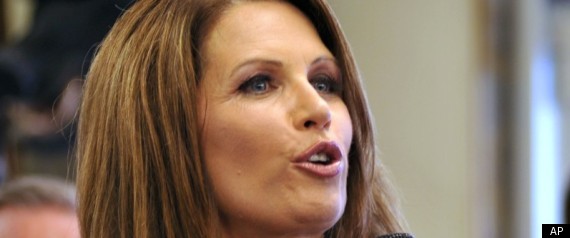
    (AP/The Huffington Post) POINCIANA, Fla. — Republican presidential candidate Michele Bachmann claims the U.S. has more energy resources than any other country but isn't exploiting them because of "radical environmentalists."

    Bachmann said with shale oil, natural gas and coal, the United States shouldn't be "begging" others for oil and energy supplies.

    She said, "We are the king daddy dogs when it comes to energy," but that environmentalists are preventing resources from being tapped.

    With untapped oil reserves in the Arctic National Wildlife Refuge and off the nation's coasts, shale oil in Western states, and rich natural gas and coal deposits, she said the U.S. "is sitting on a mother lode of treasure."

    As president, Bachmann said she would unlock those resources and eliminate the Environmental Protection Agency.

    "The radical environmentalists have demanded that we lock up all our energy resources," she added. "President Bachmann will take that key out of the door. I will unlock it."

    The Saturday crowd at an up-scale retirement community in central Florida cheered wildly.

    And Bachmann got a similar reception when she promised to eliminate the "job killing" Environmental Protection Agency, saying that she would close the agency down in a single trip. "We will turn out the lights and we'll lock the doors," she said.


    Wednesday, August 24, 2011

    American small towns are being converted into Islamic welfare enclaves.

    Verne Strickland Blogmaster /  August 24, 2011

     IF THIS GETS YOU INCENSED AND PRIMED TO FIGHT BACK, I'VE SUCCEEDED.


    Newly arrived Somali immigrants flock to small towns and cities such as Lewiston, Maine; Shelbyville, Tennessee, St. Cloud, Minnesota, Clarkston, Georgia, and Jamestown, North Dakota, where they head straight for the local welfare office.


    The Jamestown Sun reports that 400 Somalis have applied for public housing in the past four months. The Somali immigrants in Garden City, Kansas and nearby small towns have created the Somali Community Center of Southwest Kansas in order to tap into public welfare programs. Within this section of the heartland, white Christians have become the minority.

    In East San Diego, the newly arrived Somalis have created a Little Mogadishu. The streets are lined with Somali stores, shops, and mosques. In the midst of this ethnic enclave stands the Iftin Charter School, where K-8 students are introduced to Arabic. 99% of the student population is Somali; Arabs constitute the remaining 1%.

    The American Somalis now display the highest unemployment and poverty rates in the country. They also remain the least educated. According to Andrew Liepman, the deputy director of intelligence at the National Counterterrorism Center, Somali-Americans face “greater insularity compared to other, more integrated Muslim immigrant communities, [which] has aggravated the challenge of assimilation for their children.”

    This problem is crystallized by the present situation is Lewiston, Maine, where African Muslims, many from the Bantu tribe, began arriving in 2001 at the rate of 100 a month.
    Mohammed Maye, the president of the African Community and Refugee Center in Clarkston, Georgia posted a map of Lewiston on the wall of his office. “Go to Maine,” he advised the Somali immigrants. Abdullahi Abdullahi, the president of the Somali Community Development Organization in Clarkston, upheld this advice by telling his fellow countrymen that, unlike Georgia, Maine has terribly cold winters, but “the welfare system is better.”
    Lewiston, indeed, was better. The small town in Maine with a population of 30,000 provided welfare to anyone in need, with the state picking up half the tab. Recipients, including the Muslim refugees, were allowed a generous five years of assistance before their benefits became terminated, and extensions for several additional years on the public dole were not difficult to obtain. Single parents could stay on welfare and go to college.
    Public housing was also available, although, with the influx of Somalis, the housing projects became packed to capacity. Many of the new project dwellers were single Somali mothers with large broods of children. Those who are unable to obtain public housing were handed Section 8 vouchers, which the federal government provided to subsidize their rent in private apartments. The northern city with its frigid climate became welfare heaven for the arrivals from the vast desert areas of northern Africa.
    The newcomers have shown scant interest in securing employment. When Renee Bernier, the president of the Lewiston city council, offered to hire 30 Somalis at the rate of $8 to $10 an hour to hold warning signs at construction sites, few displayed interest. The handful, who did apply, said that they were only willing to work between the hours of 10 a.m. and 2 p.m.

    The Somali population of Lewiston now exceeds 40,000.  H/T MICHAEL

    http://barenakedislam.wordpress.com/2010/07/15/somali-muslim-immigrants-turning-american-small-towns-into-islamic-welfare-enclaves/

    Four NC Democrats named "Most Vulnerable" (no -- not "Most Valuable") by 'The Hill'

    Verne Strickland Blogmaster / August 24, 2011


    The result of record deficits haunts incumbent Democrats
    North Carolina Republican PartyRALEIGH, NC – Four members of the North Carolina Democratic Congressional Delegation have been named “most vulnerable” by The Hill, a non-partisan Washington, D.C. publication.

    Rep. Larry Kissell took home the top prize of “Most Vulnerable Democrat”, followed by “#4 Most Vulnerable Democrat” Rep. Heath Shuler, and “Honorable Mentions” Rep. David Price and Rep. Mike McIntyre.

    These four were members of the 111th Democrat-controlled Congress that helped pile a whopping $4 Trillion on to our national debt in just 2.5 years under the leadership of President Obama.

    It is also notable that the 111th congress failed to pass a congressional budget to determine government spending, one of the core responsibilities that they are supposed to perform.

    NCGOP Chairman Robin Hayes had this to say:It is interesting to note that there is 1 “vulnerable Democrat” for every $1 Trillion added to the debt under President Obama.

    "The fiscal irresponsibility of these four and their Democratic colleagues led to a jump in unemployment to unacceptable levels both nationally (9.1%) and in our state (10.1%).

    "The people of North Carolina want responsibility and leadership restored in Washington, D.C., and that happens by replacing these members of Congress next November.”

    URL: http://thehill.com/blogs/ballot-box/redistricting/177611-five-most-vulnerable-democrats-from-congressional-redistricting
    Paid for by the North Carolina Republican Party
    www.NCGOP.org

    Here's the nitty and the gritty on Golden LEAF, a scandal-ridden political slush fund still running wild in NC.

    Verne Strickland Blogmaster 

    Want to get really sick and disgusted? Inside information on the swindle known as the Golden LEAF Foundation should do the trick. Sketchy bookkeeping and backdoor deals have been rampant.

    Carolina Journal News Reports / August 23, 2011
     

    Golden LEAF has operated often as a political slush fund. 


    Along with the Tobacco Trust Fund and the Health and Wellness Trust Fund, these operations distribute North Carolina's share of the Master Settlement Agreement with the tobacco companies.

    As much as $2.6 billion in unaccountable spending is involved. Check here for updates on the boondoggles these funds underwrite, along with legal and legislative attempts to rein in the spending.

    (4.28.11) House Budget Proposal Redirects Tobacco Settlement Funds
    RALEIGH — Under the GOP House budget plan, the Golden LEAF foundation would lose its $68-million allocation next year, and the Tobacco Trust Fund and the Health and Wellness Trust Fund would be abolished.

    (2.04.11) General Assembly Can Dissolve Golden LEAF, Other Tobacco Funds
    RALEIGH — In recent years, defenders of the funds receiving money under the 1998 Master Settlement Agreement with tobacco companies have said the funds could not be transferred or diverted to the state’s General Fund because the use of the funds was directed by court order.

    (2.02.11) Senate Committee Guts Golden LEAF’s 2011 Allotment
    RALEIGH — For years, Republicans and limited government advocates have criticized Golden LEAF as a political slush fund, but Democrats at the Senate Appropriations/Base Budget Committee hearing defended it as a job-creator.

    (12.09.10) Perdue Targets Boards and Commissions
    RALEIGH — Appointments to boards and commissions traditionally have been considered a major element of political patronage. Perdue is seeking to eliminate dozens of boards to which Republicans are poised to make significant appointments.

    (8.09.10) Golden LEAF Funds Yacht Slips, iPod Touches
    RALEIGH — Others grants include funds for renovating a vacant structure in Winston-Salem to house a “green business incubator” and an initiative to encourage consumers to spend at least 10 percent of their grocery budgets on locally grown foods.

    (8.02.10) Tobacco Trust Funds Footbridge to Nowhere
    RALEIGH — The state-run trust fund was meant to assist North Carolina farmers, farm workers, and related businesses displaced by tobacco’s declining fortunes. It handed out a record number of grants this year.

    (11.23.09) Golden LEAF Retains Close Ties to Easley
    RALEIGH — As federal prosecutors investigate alleged campaign finance violations and other suspected wrongdoing by embattled former Gov. Mike Easley, his law partners and other associates continue to play key roles in the management of the Golden LEAF Foundation, which distributes half of the state’s tobacco settlement money.

    (7.17.08) A Lab, A Grant & A Bad Odor
    Doing a sales job on a biodefense lab in Granville County hardly qualifies as legitimate expenditure of Golden LEAF funds.

    (5.28.08) The Global TransPark’s New LEAF
    To the extent they hear the details, most North Carolinians will be angered, not appeased, by the latest TransPark/Golden LEAF deal.

    (11.03.06) Nip Venture-Capital Idea in the Bud
    Here’s such a bad idea that the right response, as Deputy Barney Fife might put it, is to “nip it in the bud.”

    (8.17.05) Teapot Museum Creates Tempest
    RALEIGH — A proposed Alleghany County museum that would display 6,000 teapots worth more than $5 million has become the poster child for pork barrel spending in the recently passed state budget. A $400,000 earmark for the Sparta Teapot Museum was frequently mocked in the media in the past week, and by Republicans in the legislative minority. But Rep. Jim Harrell III, an Elkin Democrat who sought the funding in the state budget, said the museum's critics don't know enough about the project to evaluate its worth.

    (1.10.05) Golden LEAF Defends Funding
    RALEIGH — Gov. Mike Easley and members of the General Assembly will again have to tangle with a large state budget gap when they return to work later this month, and millions of dollars from North Carolina's share of the national tobacco settlement will likely help close it. Policymakers took a combined $240 million from the Tobacco Trust Fund and Health & Wellness Trust Fund in 2002 and 2003. But they have failed to touch the foundation that they designated to receive the other half of the state's tobacco settlement money: the Golden LEAF Foundation, which will seek to protect its funding again in 2005.

    (12.20.04) No to Horse Parks, Yes to Tourism
    RALEIGH — The Golden LEAF Foundation stopped funding equestrian parks this year, at least temporarily, but instead it found several other tourism-related projects in North Carolina worthy of support in its annual round of grants. The foundation’s board determined that more than $1.5 million should assist community plans to develop local tourist attractions. It funded several off-the-beaten-path projects, including $135,000 to aid Jackson County in “the transformation of the closed…landfill into a regional center for the growth of the arts and crafts community, the local agriculture and native botanical industry, and heritage tourism based on the region’s long history of craft excellence.”

    (8.13.04) Golden LEAF Rides New Horse
    RALEIGH – After funding the Carolina Horse Park Foundation for three consecutive years, Golden LEAF has found another equestrian organization to support. The Piedmont Equestrian Park and Conference Center, based in Gaston County, is a nonprofit organization that was set up by the county and city to help attract economic development. The slow development of the project has made local officials apprehensive. "Guess who’s going to get accused or squandering this money if this thing flops?" asked one county commissioner. "Everybody on this board."

    (5.03.04) This is Not a Parody
    It's a story about subsidized entities asking for more subsidies for a profitable industry that's moving North Carolina business out of state. And it's true -- really.

    (2.22.04) Separate but Equal -- On Economic Development
    The February cover story of Carolina Journal provided evidence of a conflict between economic-development policy and the NC constitution.

    (2.13.04) Auditor Reports on Nonprofit Funding
    RALEIGH — The State Auditor’s Office has delivered to the General Assembly and the Easley administration a new report detailing grants to nonprofit organizations by state agencies last year. The annual report catalogues all grants made by state agencies to nonprofits such as Smart Start partnerships, economic development groups, and community service agencies. Legislators last year set a deadline of Jan. 31 for compiling the report as part of an effort to increase oversight of nonprofit agencies. Most of the nonprofits met the reporting requirements in time, but a few did not.

    (12.23.03) Golden LEAF lists 2003 grants
    RALEIGH — The Golden LEAF Foundation awarded $300,000 each to Columbus County and the Town of Windsor for infrastructure improvements at two new state prisons. The nonprofit foundation, established by the General Assembly to distribute half of the state’s portion of the 1998 tobacco settlement, also decided in 2003 to fund a Southern-Pines-based horse park for the third year in a row. The Carolina Horse Park Foundation began in March 1998 primarily as a nature conservancy group to prevent land development, and changed its name twice as it transitioned into an equestrian events support organization.

    (8.08.03) Another Round of Promises & Pork
    North Carolinians have also had more than their share of false promises and costly political boondoggles. And now it's happening again, with biotechnology.

    (2.12.03) Businessman Sues Group Affiliated with Golden LEAF
    Don Carrington breaks a story about a businessman who has sought to build an ethanol plant in North Carolina for more than 20 years and is suing a consortium of interests including the North Carolina Grain Growers’ Cooperative, which is heavily financed by Golden LEAF.

    (12.20.02) Golden Leaf Official’s Business, Brother Linked to $10 Million Grant
    Don Carrington reports that two brothers, one the chairman of Golden LEAF and the other a director of a grain growers cooperative, own businesses associated with a $10 million foundation grant to build a soybean-processing facility and a related biodiesel fuel plant.

    (10.30.02) Easley, Basnight Manipulate Golden LEAF, Papers Show
    The Golden LEAF Foundation, which administers half of North Carolina’s share of the national tobacco settlement, claims to operate independent of political persuasion. But documents obtained by Carolina Journal suggest that Gov. Mike Easley and N.C. Senate President Pro Tem Marc Basnight wield significant influence over the nonprofit foundation, reports Paul Chesser.

    Tuesday, August 23, 2011

    Social Degeneration -- a refreshing and courageous essay on race in America

    Verne Strickland Blogmaster / August 23, 2011

    THIS GET 'ER DONE, CANDID ESSAY IS ONE REASON I AM A FAN OF THOMAS SOWELL AND MAYOR MICHAEL A. NUTTER OF PHILADELPHIA!


    08-16-2011 7:35 pm  Thomas Sowell - TownHall.com


    Someone at long last has had the courage to tell the plain, honest truth about race.

    After mobs of young blacks rampaged through Philadelphia committing violence -- as similar mobs have rampaged through Chicago, Denver, Milwaukee and other places -- Philadelphia's black mayor, Michael A. Nutter, ordered a police crackdown and lashed out at the whole lifestyle of those who did such things.

    "Pull up your pants and buy a belt 'cause no one wants to see your underwear or the crack of your butt," he said. "If you walk into somebody's office with your hair uncombed and a pick in the back, and your shoes untied, and your pants half down, tattoos up and down your arms and on your neck, and you wonder why somebody won't hire you? They don't hire you 'cause you look like you're crazy," the mayor said. He added: "You have damaged your own race."

    While this might seem like it is just plain common sense, what Mayor Nutter said undermines a whole vision of the world that has brought fame, fortune and power to race hustlers in politics, the media and academia. Any racial disparities in hiring can only be due to racism and discrimination, according to the prevailing vision, which reaches from street corner demagogues to the august chambers of the Supreme Court of the United States.

    Just to identify the rioters and looters as black is a radical departure, when mayors, police chiefs and the media in other cities report on these outbreaks of violence without mentioning the race of those who are doing these things. The Chicago Tribune even made excuses for failing to mention race when reporting on violent attacks by blacks on whites in Chicago.

    Such excuses might make sense if the same politicians and media talking heads were not constantly mentioning race when denouncing the fact that a disproportionate number of young black men are being sent to prison.

    The prevailing social dogma is that disparities in outcomes between races can only be due to disparities in how these races are treated. In other words, there cannot possibly be any differences in behavior.

    But if black and white Americans had exactly the same behavior patterns, they would be the only two groups on this planet that are the same.

    The Chinese minority in Malaysia has long been more successful and more prosperous than the Malay majority, just as the Indians in Fiji have long been more successful and more prosperous than the indigenous Fijians. At various places and times throughout history, the same could be said of the Armenians in Turkey, the Lebanese in Sierra Leone, the Parsees in India, the Japanese in Brazil, and numerous others.

    There are similar disparities within particular racial or ethnic groups. Even this late in history, I have had northern Italians explain to me why they are not like southern Italians. In Australia, Jewish leaders in both Sydney and Melbourne went to great lengths to tell me why and how the Jews are different in these two cities.

    In the United States, despite the higher poverty level among blacks than among whites, the poverty rate among black married couples has been in single digits since 1994. The disparities within the black community are huge, both in behavior and in outcomes.

    Nevertheless, the dogma persists that differences between groups can only be due to the way others treat them or to differences in the way others perceive them in "stereotypes."

    All around the country, people in politics and the media have been tip-toeing around the fact that violent attacks by blacks on whites in public places are racially motivated, even when the attackers themselves use anti-white invective and mock the victims they leave lying on the streets bleeding.

    This is not something to ignore or excuse. It is something to be stopped. Mayor Michael Nutter of Philadelphia seems to be the first to openly recognize this.

    This needs to be done for the sake of both black and white Americans -- and even for the sake of the hoodlums. They have set out on a path that leads only downward for themselves.

    ---------------------------------
    Thomas Sowell is a senior fellow at the Hoover Institute and author of The Housing Boom and Bust.

    ©Creators Syndicate

    http://townhall.com/columnists/thomassowell/2011/08/16/social_degeneration