Tuesday, June 3, 2014

NC Newsman Verne Strickland depends on the Holy Bible for what's coming in the headlines. God's Word keeps him ahead of the pack.

 The Bible in modern times 
more relevant than ever.


By Verne Strickland: 50-year veteran of TV and Internet News
Wilmington NC June 3, 2014 
I'm a news junkie and writer. I scan the headlines and the talk shows every day without fail to stay abreast of what's happening and who's doing what to whom. But I find more and more that the most definitive source of news is the Holy Bible. Odd that I should say that? I have lived long enough to know it. And I pass it on to my peers as well as the younger generations: 
OUR GOD KNOWS MOHAMMAD, THE EVIL ONE. HIS SNARES ARE DESCRIBED IN THE HOLY BIBLE. THESE ARE THE TIMES. BE YE FOREWARNED.

Brace yourself. This is the future. Your future and mine. God has prophesied this, and we have been forewarned. Sound like today's evil times, wherein Allah-inspired Islamic madmen are abroad, casting about for infidel victims? Pray for grace, wisdom and faith. It is coming.

John 16:2-3 "You will be thrown out of the synagogue. In fact, a time is coming when those who kill you will think they are doing God a favor. 3 They will do things like that because they do not know the Father or me."


Monday, June 2, 2014

features@ap.org

Verne Strickland USA DOT COM  June 5, 2014

Read this impressive story by Allen G. Breed. It's an authoritative review of the day that "The Greatest Generation" earned its nickname.

Allen G. Breed is a national writer, based in Raleigh, N.C. He can be reached at features@ap.org. Follow him on Twitter at https://twitter.com/AllenGBreed.

 Stories of  "The Longest Day"  June 6, 1944


June 6, 2014 USA DOT COM
Verne Strickland: D-Day has always provoked awe, excitement and great respect in my mind and heart. It did the first time I learned of it, when I was a seven-year-old boy in rural Battleboro, North Carolina. It does to this day. It was the most audacious, God-inspired undertaking for freedom that the world has known. Our America -- under God -- galvanized her might and power to crush despots in Europe, Asia and elsewhere. It was a statement that rings proud and true to this day. The loss was great. The victory was greater. Would that we could be so bold and brash today again in 2014. But I am afraid our tentative leaders have lost the focus and greatness we once had. But today is a time to think back and remember when we trusted God and our own destiny. The Greatest Generation had spoken. We could not be ignored.

SEVEN LAKES, N.C. (AP) — Seventy years later, Ray Lambert is still haunted by waves.
Listening to the waters of Lake Auman lapping against the dock behind his pine-shaded home, the 93-year-old is transported back to a beach on the northern coast of France. With a faraway look in his eyes, Lambert is suddenly a young soldier again, racing frantically among the wounded and dying as German rockets on the cliffs above erupt with tongues of fire and a sound "like women screaming."
"You can hear the boats hitting the waves, and you can hear guys calling for a medic on those waves," the retired bank director says. "And I still, after all these years, I wake up at night sometimes, thinking about the guys ..."
It is, he says, "as if the waves are telling me stories that I already knew."
They are stories of D-Day — June 6, 1944.
That stormy morning, 156,000 Allied troops crossed the English Channel and into the maw of Adolf Hitler's killing machine. The assault by 7,000 ships and landing craft along a 50-mile stretch of the Normandy coast remains the largest amphibious invasion in history.
Lambert, a combat medic, was with the 1st Infantry Division, which accounted for more than half of the 32,000-strong U.S. force that landed on Omaha Beach. Of the more than 16,000 members of the "Big Red One" who staggered out of the landing craft, 3,000 were killed, wounded or captured. Today, only Lambert and a couple dozen others are known to remain.
Many of those who survived that "longest day" have felt compelled over the years to bear witness for those who didn't make it. As their own candles begin to falter, that need burns fiercer than ever.
Some don't trust future generations to keep that flame alive.
"They don't talk about it in schools," says 92-year-old James Krucas of Racine, Wisconsin, whose actions earned him the Silver Star. "In 20 years, there will be no veterans around to tell them this was the day that saved the world."
___
After months of planning and waiting for the right conditions, Gen. Dwight Eisenhower gave the green light to "Operation Overlord." The plan was to land 133,000 American, British and Canadian troops on five Normandy beaches, code-named Gold, Juno, Omaha, Sword and Utah.
The attack was supposed to have commenced on June 5, but rain and high seas in the English Channel forced planners to push things back a day. The night before, at Cottesmore Airdrome north of London, PFC Leslie Palmer Cruise Jr. and the other members of H Co., 505th Parachute Infantry Regiment, 82nd Airborne were all geared up when they got the word to stand down.
The paratroopers were disappointed, said the retired architect from Horsham, Pennsylvania. But late on the 5th, the order came to assemble, and soon the sound of planes all winding up their engines simultaneously was like thunder.
As the Douglas C-47 carrying him and his 21 fellow paratroopers moved over the Channel, Cruise looked down to see the outlines of thousands of ships, "all sizes and kinds," on the water below.
Awaiting orders in the troop ships and landing craft bobbing offshore, men read Bibles, played cards and wrote letters home. Others tried to choke down what some were calling the "last supper" of powdered eggs, oranges and little sausages.
"There was a saying going around," recalls Richard Crum of Williamston, Michigan. "'They're fattening us up for the slaughter.'"
Aboard the USS Chase after a sleepless night, the men were given the opportunity to be received by a chaplain. Two lines formed.
"It was about four in the morning, and you could hear a pin drop," recalled Cpl. Bill Falcone, now 94, a former New York City police officer.
Nearby, on the attack transport ship USS Henrico, Staff Sgt. Ray Lambert and his older brother, Euel, also a medic with 2nd Battalion, 16th Infantry Regiment, prepared for their third major invasion. They had been with Gen. Omar Bradley in north Africa and had also made the landing in Sicily.
Unable to eat, the brothers went up on the deck and talked of their families back home. Ray's first child, Arnold Raymond Jr., was born in January 1942, while he was in Africa. He'd yet to hold his namesake. The brothers vowed that whichever of them survived would take care of the other's family.
"So we shook hands and wished each other well and then went down the nets and got into the Higgins boat," Ray says.
Just getting into the landing craft was dangerous.


"We had waves 4 to 6 to 8 feet," says Charles Shay, another combat medic and a member of the Penobscot Indian tribe who lives on the reservation at Old Town, Maine. "We had to jump into the boat when it was at its highest point to avoid breaking our legs."
Shay, 89, recalls the sound of shells passing overhead — both from the Germans ashore and their own ships behind them. Falcone could see the German tracers carving paths up the beach. Heading toward shore, the assault force was seasick, terrified — and angry.
"Get me on land!" Falcone recalls shouting.
The craft carrying Command Sgt. Maj. William F. Ryan took a direct hit from a German 88 mm artillery piece.
"All I remember is the boat going up and over," the 89-year-old from Melbourne, Florida, says. "I cracked my skull against the bulkhead."
Still, he waded into the water several times to retrieve the wounded and dead. Finally, two men, seeing he was losing consciousness, dragged him ashore.
The Germans had fortified the beach with railroad cross ties, barbed wire and heavy steel fences known as "Belgian gates." Unable to pass, many landing craft disgorged their cargo — human and mechanical — into the open water.
Shay says many men standing at the front when the ramps dropped were immediately killed. Others were pulled down by their heavy equipment and waterlogged clothes. Landing in chest-deep water, Shay dragged himself past the dead and floundering and made it to shore.
"You could not expect help from anybody, because it was a matter of survival," he says, half defensively. "We had to get to the beach."
___
While men were clawing their way across the sand and loose stones, others were hoping to catch the Germans in the rear.
Looking at a map of France, Cruise points out where he and his fellow paratroopers were: heading toward the west coast of the Cotentin Peninsula, which juts into the Channel. The others had jumped into Sicily and Italy, he says, "but I had no idea what to expect."
As soon as the planes passed the coastline, flak from German anti-aircraft batteries began bursting in the air around them. Suddenly, a red light flashed in the plane's violently vibrating belly.
The colonel shouted to stand, get ready, sound off.
Cruise was in the No. 9 position. "Nine, OK," he screamed over the din.
At the drop zone — over the village of Sainte-Mere-Eglise — a green light flashed.
"Let's go," the colonel yelled. And they leaped into the dark Norman night.
Seeing silhouettes drifting around him, Cruise remembers fretting about losing the gear tethered to his harness. He managed to clear a 30-foot hedgerow and slammed backward into the French soil.
"My helmet came forward," he says. "Hit me on the nose."
Many were not so lucky.
Passing through the area in coming days with the 294th Combat Engineer Battalion, Dickinson Debevoise recalls seeing the bodies of paratroopers dangling from trees and floating in the flooded ditches along the causeway.
By then, not much fazed him.
"There were bodies all over the place," says the former sergeant, now a federal judge living in Summit, New Jersey. "So, unfortunately, that was
 not an unusual sight."
___

Back on Omaha Beach, Shay sprinted from barrier to barrier and at last made it to the relative safety of an embankment.
"That gave us time to rest and regain our senses," he says.
He recognized Ray Lambert, the man who'd trained him as a replacement back in England. The Jeep carrying Lambert's medical chests and the rest of his gear had sunk to the bottom of the Channel. Working with what he was carrying, he began sorting the floating wounded from the dead and dragging them ashore.
Lambert was applying tourniquets and doling out morphine when something — a bullet or piece of shrapnel, he's not sure which — passed through his right arm, just above the elbow. The arm went numb, but he continued his grim work.
Then a piece of shrapnel "about the size of my hand" struck him in the fleshy part of his left thigh, opening a huge gash. Lambert packed the wound, wrapped a tourniquet around his leg and went back to work, but he was running out of supplies.
Weakened by blood loss, Lambert found one of his men — Cpl. Raymond Lepore.
"I'm not going to make it much longer," he said. "You better try to get the men together and see what you can do about treating some of these guys."
Lambert had barely finished giving the order when Lepore "got a bullet right through his head and fell against my shoulder."
1st Sgt. Euel Lambert was in Co. G, the same unit as Krucas, a 2nd lieutenant. When the elder Lambert went down with massive wounds to his right arm and leg, his comrades stacked corpses around him to shield him from the withering fire, according to a unit history.
The company commander, Capt. Joe Dawson, took a few men, blew a gap in the barbed wire and took out a machine-gun nest with hand grenades, easing the pressure on the guys below, Ray Lambert recalls.
Some of the Navy fire control teams had lost their radios during the landing. Ryan, the sergeant major from Florida, says a young soldier from battalion headquarters — an Eagle Scout with a merit badge for Morse code — found a signal lamp lying on the beach and established communications with a destroyer.
"And even though he wasn't trained as a forward observer, he directed fire on the hill," Ryan says. "And that's what saved us."
In the chaos, Shay became detached from his company. Roaming the beach, looking for men to help, he came across a fellow medic whom he knew. The man was bleeding from a stomach wound. They both knew he was dying.
"I bandaged him as best I could," Shay says softly. "I gave him a shot of morphine, and we said goodbye to each other — forever."


By the time the fourth wave approached the beach, the German fire had diminished greatly. But so many corpses covered the beach that the craft were having difficulty discharging their men and equipment.
Besides, says Lambert, "It was very bad for morale, with the guys coming in from the other boats."
A bulldozer gouged out a trench near the beach road, and the bodies were collected there. "Terrible," he says, but necessary.
Lambert again waded into the water to help a man struggling in the surf. Just as he seized the man with his good arm, a landing craft lowered its ramp onto Lambert's back. He didn't know it until later, but the blow had crushed his fourth and fifth vertebrae. Despite excruciating pain, he managed to drag himself and the wounded soldier ashore.
Soon afterward, he passed out.
He awoke some time later on a landing craft, heading out to sea. Somewhere among the other wounded was his brother, Euel, also being evacuated.
It was still too early to know whether the D-Day invasion would succeed. But for the Lambert brothers, the war was over.
___=
For many survivors, that day remains the most important of their long lives.
"Stuff after was frost on the cake," says Krucas, who retired from Racine Boiler and Tank and is working on his memoir.
To Debevoise, it was a pivotally important day in the life of the nation.
"Germany would've taken over all of Europe, Russia, I think, eventually, the United States," says the judge. "We would never have known the life that we know."
Even so, he says he doesn't expect people to be "jumping up and down about a war that was 70 years ago."
"Memories are short," he says. "You do your duty in your day, and other people will be doing their duty in their day."
On a shelf in Ray Lambert's living room, a shadow box holds his medals: The Silver Star with two oak leaf clusters; a Bronze Star with one oak leaf cluster; the Purple Heart, with three oak leaf clusters. The awards fill him with pride, but also remind him of those he was unable to save.
He remembers one in particular. The man lay at the water's edge, grasping in vain at his nearly severed arm as it floated in and out with the rolling tide. Lambert lifted the soldier's head and searched for some words of comfort.
The man died in his arms.
"And when I look down that beach now, I can see that spot," he says, his voice cracking slightly. Despite everything he did that day, Lambert can't help feeling that "I should have done more."
In 1995, his regiment made him a "distinguished member." With the honor comes the responsibility to carry the message for those who've passed. But, sometimes, he gets discouraged.
A couple of years ago, he was eating at a local restaurant when the waitress overheard him discussing an upcoming trip to Omaha Beach. He asked if she knew where that was.
"And she thought for a minute and she said, 'Well, I think it's down near Myrtle Beach, isn't it?'" he says with a sigh.


Lambert will be marking the 70th anniversary at Fort Riley, Kansas, the 1st Division's current home. Others will make the journey back to France.
Ryan has returned to Normandy every year since 1994. It never gets any easier.
"I don't care how tough you are," he says, his eyes welling with tears. "It gets you. It gets you."
Cruise expects to be there when the restored "Whiskey 7" — the C-47 that carried him across the Channel — once again drops American parachutists over Sainte-Mere-Eglise.
Shay plans to be at Omaha Beach. As he has done in years past, the tribal elder will wake early, while the tourists and dignitaries are still abed, and walk to the water. At 6:30 a.m., about the time the invasion began for him, he will perform a solemn Penobscot ceremony, the details of which are only for himself and "the men that have remained there."
"I try to remember the spirits of the men that are still there," he says, "and try to communicate with them."
He cares little whether, after he's gone, people will remember his part that day.
"But," he says, "I hope that the men who paid the ultimate price — the true heroes — will never be forgotten."
___
Contributing to this story were AP video journalists Ted Shaffrey in Summit, N.J., and Tony Winton in Delray Beach, Fla.; AP Writers Suzette Laboy in Melbourne, Fla., Kathy Matheson in Horsham, Pa., M.L. Johnson in Racine, Wis., and Mike Householder in Williamston, Mich.; and AP photographer Robert F. Bukaty in Old Town, Maine.

Allen G. Breed is a national writer, based in Raleigh, N.C. He can be reached at features@ap.org. Follow him on Twitter at https://twitter.com/AllenGBreed.

USA Dot Com: Diversity -- It's not my preference and not my pro...

USA Dot Com: Diversity -- It's not my preference and not my pro...: Echo Farms Golf Community Riverfront Wilmington NC   Historic Downtown Wilmington Echo Farms Golf CC Diversity...

Diversity -- It's not my preference and not my problem. I don't take it or leave it. I just avoid it.


Echo Farms Golf Community


Riverfront Wilmington NC


Historic Downtown Wilmington


Echo Farms Golf CC


Diversity to me is only one more irritant. I don't want it and don't need it.

 By Verne Strickland 
June 2, 2014

The only time I see a black face these days is when I watch Amos & Andy re-runs or catch another boohoo story about the passing of Maya Angelou who knew why the caged bird sings.

Diversity to me is only one more irritant. I don't want it or need it. I have plenty of variety and change in my life without it. Even the blacks can't put up with diversity. Black students nowadays have to have people of color to teach them. 

After all the rioting, burning, killing and looted American cities, I wonder why the hell we even went through all the "unrest" to live together happily and equally. Thinking back, I hardly think we could have avoided it unless we walled off the cities and sent in National Guard troops. This was war. 

We moved from the jingle jangle jungle atmosphere of Wilmington's downtown scene, where people were routinely shot at, robbed, raped and assaulted. Clusters of  blacks walked down the middle of Castle Street, where we lived -- I presume because it demonstrated their disdain for laws written and enforced by white people. Emergencies were everywhere. Police sirens competed with the piercing whine of emergency vehicles rumbling by on the brick-paved street day and night. 

I imagined I lived in Beirut, where I couldn't understand the language. I can't understand much of it here. And I can't speak Ebonics, Ebola, gulla or cursive. But I have a degree in English and I'm a writer. So I'm better equipped than most.

We didn't rarely walk the lovely shaded neighborhood streets after dark. I should note that there was no shade at night. But that's another story. Black kids walking by outside could be heard a block away, chatting and jiving in overly-loud voices. The raucous banter could be heard through the walls. We lived with it.

Furniture was taken from our porch; shrubs planted inside our picket fence were dug up and carted away. Car windows were punched out and the interiors looted. Shots punctuated the night. The following morning the newspaper had the details. Shooting, mugging, bullets fired from cars. Yes, it was like that. The downtown was reeking with diversity.

We loved the neighborhoods and the neighbors. One family was black. My pal Joseph and I talked amiably whenever he walked by. The historic district was ideal for foot traffic, with lots of sidewalks. But after dark the blacks owned the place. Occasionally I would see a white neighbor emerging out of the gloom and into a pool of light from a street lamp. Even girls would risk it, but denied they were worried. Most made it without incident. Some didn't. They were in the papers too. 

All of these histrionics could be quickly and irritably dismissed by some. And that's okay. I write what I write. I speak what I feel. And I'm a writer, meaning there may be a tinge of mellerdrammer built in. But this is the reality of it as I see it. 

We moved from the city, where we had lived for around twelve years. We do miss our lovely old Italianate two-story shotgun dwelling, built as a rental in 1871. It   was lovingly restored by our son Martin, a talented residential contractor. Like his mom and dad, he is addicted to the old homes too, and gave great attention to detail in his work.

A number of things figured into our departure. The crime and unrest. The noise. The dirt and dust, stirred up by traffic on the quaint paved street. It laid a covering of grime on porches and windows, and even permeated the old house. 

My wide Durrene and I were feeling our years. She had suffered through spinal stenosis, and a broken leg, caused by a fall on a rain-slickened sidewalk. I had come through a bout with cancer in my hips and legs, and walked unsteadily, with a cane, realized that sooner or later I would break my neck negotiating the stair steps -- exactly eighteen in number.

Yes, it was time to go. We knew it. And Bank of America agreed with us. We had battered our retirement account unmercifully with hefty monthly mortgage payments, and were slipping toward foreclosure. They wanted to put our furniture and all our belongings out on the sidewalk, but we said the blacks would steal it all. They agreed, so we got a little extra time and they sent their movers back to the offices of Two Men and a Truck. There were four men. You know advertising.

The decompression was dizzying. At our airy, sun-drenched one-story home on Sand Trap Court in the golfing community of Echo  Farms, we relax in almost total tranquility at night. No traffic noise, few sirens or car horns, no irritating shouts or raucous voices, no gunfire. No pedestrian traffic on our wooded little cul-de-sac. And no blacks. No diversity. None.

I don't care how that sounds. It's what I want, and I can have it. It's what I want for my wife Durrene. Both of us, I remind you, have been slowed by years and illness. We've pulled our time in the demilitarized zone. We don't want to take a shotgun to answer the doorbell, we don't want to be apprehensive any hour of the day or night. We can relax on the spacious sundeck shaded by a big oak and watch the golfers out on a green rolling fairway, merrily flailing away at their golf balls when they can find them.

Sometimes they can't, as many of their errant shots veer wildly off course and crash on our roof, or on neighboring houses. It's amusing, actually.  Last week one ball looking for a hole made one when it found a window at a home next door. Of course it riled the lady who lives there.

But usually the balls bounce noisily but harmlessly off the roofs or land in the yard. The golfers can't search for them in private yards. So they are called "lost balls." At first I thought they were Easter eggs. We pick them up when we find them and put them in a big glass bowl on the deck. We have over twenty of them. 

We do hear the crackle of rifles during the week from a police firing range maybe a mile away. But we understand what it means. And we want our policemen to be excellent marksmen, and we want them to be able to hit a target -- no matter what it is.

There are downsides to living in a golfing community. Did I say silence? I meant silence. At night you can only hear the crickets, the winds sighing in the big oaks, and the occasional rumble of thunder when God starts moving some of the furniture up in heaven. 

I wouldn't call this isolation. But I do love the solitary life as a writer. I can think undistracted, write in this land of free speech, and talk on the telephone without shouting. I think my blood pressure is probably at a record low for a white guy at 77 and counting.

Neighbors? Well, they're all over. But we don't see them. Or don't see them much. This is the South, but the people who live here are many times from other states, regions or countries. They came here for the sun and the golf and a good life-style. So they don't visit like we used to where we could talk across the picket fence or porch rail. But they're friendly enough. Got no problems there.

They're also elderly -- the large majority of them. And many are ill. Durrene and I register high in both those categories. They're not as ambulatory as they used to be, and we understand that at our stage of life. Durrene and I walk with canes. I do all the grocery shopping now, and at the store I employ an electric riding cart. At first I was a little self-conscious about that, but now I enjoy it. 

One of the last days when I stubbornly relied only on my cane, my legs had become so weak I could barely reach the check-out counter. So the friendly Food Lion assistant, taking note of my gray hair and desperate-looking eyes, came to the rescue with a powered shopping cart, helped me load my groceries and unload them at my car.  

"Never again," I told her, thanking her for her courtesy. The store is great. The staff know me and are invariably agreeable and helpful. Even when my dementia betrays me, and I motor away from the cash register after paying, leaving a bag or two that I neglected to pick up. Oh, and asking cashier if I could please get some help going back in to get a bag of grapes, some canned dog foot or a bottle of milk.

I say thank God for Food Lion. Thank God for Echo Farms. Thank God for Wilmington, for North Carolina and our blessed nation of of America. And for freedom, whereby we can embrace diversity or leave to others who want it and need it or can't escape it.

Saturday, May 31, 2014

BLOCKBUSTER NEWS FROM VERNE STRICKLAND. I HAVE INFORMATION FOWARDED TO ME EXCLUSIVELY FROM A FRIEND IN SUPPLY NC THAT BERGDAHL WAS A DESERTER!

  •  THIS CAME TO ME ON  MY COMPUTER WITHIN THE LAST FEW MINUTES IN WILMINGTON, NC. NO INDEPENDENT VERIFICATION. I KNOW AND TRUST THE SENDER.

    VERNE STRICKLAND  USA DOT COM, VERNE STRICKLAND FACEBOOK.


    Tim Wilkes
    Verne- here is a little more info on the Bergdahl story from people in his unit (TIM WILKES' SON)  at the time of his (BERGDAHL'S) disappearance. I have followed it and knew of this information for quite a while and wondered how our government would spin it.
    The following is the statement from a member of his unit. Forwarded from Jeff Howard. "We were at OP Mest, Paktika Province, Afghanistan. It was a small outpost where B Co 1-501st INF (Airbone) ran operations out of, just an Infantry platoon and ANA counterparts there. The place was an Afghan graveyard. Bergdahl had been acting a little strange, telling people he wanted to "walk the earth" and kept a little journal talking about how he was meant for better things. No one thought anything about it. He was a little “out there”. Next morning he's gone. We search everywhere, and can't find him. He left his weapon, his kit, and other sensitive items. He only took some water, a compass and a knife. We find some afghan kids shortly after who saw an american walking north asking about where the taliban are. We get hits on our voice intercepter that Taliban has him, and we were close. We come to realize that the kid deserted his post, snuck out of camp and sought out Taliban… to join them. We were in a defensive position at OP Mest, where your focus is to keep people out. He knew where the blind spots were to slip out and that's what he did. It was supposed to be a 4-day mission but turned into several months of active searching. Everyone was spun up to find this guy. News outlets all over the country were putting out false information. It was hard to see, especially when we knew the truth about what happened and we lost good men trying to find him. PFC Matthew Michael Martinek, Staff Sgt. Kurt Robert Curtiss, SSG Clayton Bowen, PFC Morris Walker, SSG Michael Murphrey, 2LT Darryn Andrews, were all KIA from our unit who died looking for Bergdahl. Many others from various units were wounded or killed while actively looking for Bergdahl. Fighting Increased. IEDs and enemy ambushes increased. The Taliban knew that we were looking for him in high numbers and our movements were predictable. Because of Bergdahl, more men were out in danger, and more attacks on friendly camps and positions were conducted while we were out looking for him. His actions impacted the region more than anyone wants to admit. There is also no way to know what he told the Taliban: Our movements, locations, tactics, weak points on vehicles and other things for the enemy to exploit are just a few possibilities. The Government knows full well that he deserted. It looks bad and is a good propaganda piece for the Taliban. They refuse to acknowledge it. Hell they even promoted him to Sergeant which makes me sick. I feel for his family who only want their son/brother back. They don’t know the truth, or refuse to acknowledge it as well. What he did affected his family and his whole town back home, who don’t know the truth. Either way what matters is that good men died because of him. He has been lying on all those Taliban videos about everything since his “capture”. If he ever returns, he should be tried under the UCMJ for being a deserter and judged for what he did. Bergdahl is not a hero, he is not a soldier or an Infantryman. He failed his brothers. Now, sons and daughters are growing up without their fathers who died for him and he will have to face that truth someday."
  • Verne Strickland
    Verne Strickland
    Tim: You have to get back with me right away on this. It is a flat bombshell, and will have extreme repercussions. Do you want to release this over the Internet? If so, I'll do it. I will have to use it with attribution -- your name, military rank, and home address. You okay with that? Pray before you get back to me. I'm praying now. Verne.
  • Tim Wilkes
    Tim Wilkes
    You can do it however you wish Verne, I just received confirmation that his CSM confirmed he was a deserter but that could not be put in print or internet for his careers sake.
    As far as rank I am just a Sgt. medically discharged due to injuries with just under 11 years. Address is Shallotte, NC
  • Verne Strickland
    Verne Strickland
    Tim: Confirmation: This information says Bergdahl was (is) a deserter? For clarification.
  • Verne Strickland
    Verne Strickland
    Wow. This is heavy. Thank you, Tim. Waiting for you new transmission
  • Tim Wilkes
    Tim Wilkes
    deserted his post on guard and local afghan kids reported him walking north asking where the Taliban were. Why would you ask such a question with no weapon???
  • Verne Strickland
    Verne Strickland
    Okay. I'm getting this together.
  • Tim Wilkes
    Tim Wilkes
    War is often not what we expect; it is not pretty, glamorous or fun. It is Hell! and it is life in the raw with all the warts and ugliness exposed.
    The real truth is that it does expose our character that lies beneath us waiting for the opportunity to show us the wretched soul we truly are, a leader or the selfless sacrifice that one makes without a second thought.

Friday, May 30, 2014

Cameron NC Community Pulls together for one of God’s Little Angels: John Ryan Parker.

Submitted by Verne Strickland USA DOT COM 5/30/14

This story reached me via email. When I glanced through it I quickly realized how special it was -- powerfully written, with real love and compassion. I share it with prayers for all who love and grieve.


                                  The John Ryan Parker Story
john ryan parker

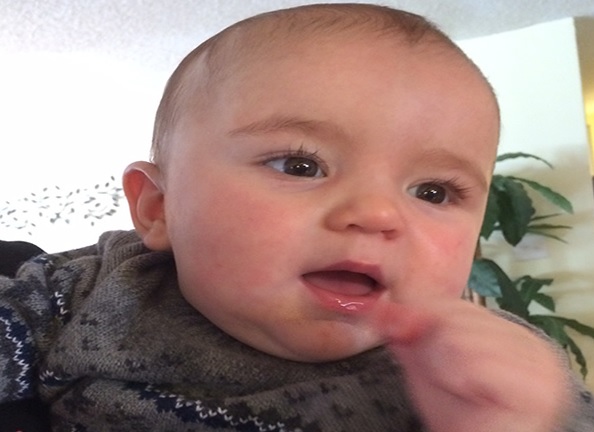
Madison and Monique were still in high school when they found out that they were expecting. Madison was 17 and Monique was 16. At first it was hard to handle the news wondering what this would do to their lives. They were so young to have this responsibility. They made the decision to choose life for their baby. Then came the excitement of having a new addition to the family. Buy, buy, buy became the new trend in both households. Madison and Monique did not live together but were inseparable.

As the pregnancy progressed and after having an ultrasound they learned they were having a boy. Daddy was getting his hunting partner and future football star! Forty weeks came and went at the blink of an eye, and then it was time to start labor. On June 12, 2013 John Ryan was finally here. He was absolutely beautiful and perfect! The family brought him home too his family and friends.

After 2 weeks they learned that John Ryan had a thyroid problem. John Ryan was going to have to take medicine every day for the rest of his life to prevent him from being very small and slow. As life went on Monique nursed John Ryan, so she stopped going to high school and started home schooling because it was just too hard to be away from him. John Ryan was nursed for 6 months. Madison played football and after every practice would race over to see him each day; Madison was a hands on dad from day one. Most kids would go to high school parties, but not these two. They went out to eat and most of the time took John Ryan with them. A typical Friday or Saturday night was hanging out at either Momma or Daddy’s house.

John Ryan had to go get blood work done every month and continued growing and learning as a normal baby would. He could say momma, but mostly grunted to get what he wanted, because it worked. He could crawl and walk around furniture, play patty cake, he learned deep and wide, and loved to jump in his jumping horse. They had bought him a walker and he learned to go forward and was all over the house. He would pull hair and attack your face with lots of kisses. He had just gotten two teeth on the bottom.

Sunday was a normal day. The family went to church, then out to eat. John Ryan was so excited that he got to sit face forward in his BIG BOY car seat for the first time. Monday morning was normal as Madison took Monique to work then took John Ryan to Sugar’s (granny’s) house. He was a little whiney Monday and did not want to be put down, then started throwing up. He was slightly lethargic and just did not feel good. He started holding his face so Sugar told Madison and Monique that they should to take him to the ER. They took him to the hospital in Fayetteville. Just like a typical baby when they got there he perked up some playing a little with his daddy. He was diagnosed with an ear infection and was sent him home. They arrived back at Madison’s home about 10 pm and John Ryan was sleeping. He slept a little longer and woke up whiney again and continued to cry off and on all night with Monique and Madison alternating pain meds. At 3:20 he screamed for about 3 seconds, and then his parents started screaming for Madison’s mother, Donna. John Ryan was having seizures. After calling 911, EMS arrived very quickly and took him to Betsy Johnson Hospital. Monique rode in the ambulance with him and Madison and the 2 grannies followed.

Once they arrived at the hospital they learned that he had an infection in his blood and it was strep throat, not an ear infection. They quickly got in touch with University of North Carolina (UNC) children’s hospital and UNC walked them step-by-step on what to do. Doctors performed a CT scan and that’s when they learned about the tumor. John Ryan was put on a ventilator and that too was a blessing as he quit breathing soon after. Emergency transportation was unable to get to him right away because of an ice storm, but after 5 hrs he finally arrived at UNC After talking to the doctor his family learned that the tumor was now no longer a golf ball size as before, it was now 4 in. by 3 in. and the family was informed that there was not much hope, but they were not giving up on him.

Wednesday, March 5th was the worst day of their lives. A doctor told them there was no hope and started talking to Madison and Monique about John Ryan being a donor. At first they said NO, but later thought that John Ryan could live forever in someone else and another family would not have to go through the grief that they were experiencing. Being a donor is a very dignified and tedious process so it took a while to get everything and everyone in place. The family got to walk John Ryan to surgery. Their lives would now be forever changed. On April 2nd we received a letter (attached) that John Ryan saved 2 lives. His heart went to a baby boy in Florida and he is doing well and his intestines, pancreas and liver went to a 3 yr old little boy who is now playing with his toys and his siblings.

Donna has said, “Looking back we know that John Ryan was born with a purpose driven life. The thyroid medicine helped make him strong and have healthy organs. He was breast fed which made him healthy, he was so spoiled because he wanted us to hold him as much as possible, and he did not want to sleep because he wanted to be with us as much as he could. His kisses were the sweetest, his cries were music. God has a perfect angel.”

The story of John Ryan should serve as a reminder to embrace every precious moment that we have with our children. When faced with the trials and tribulations that life presents, you stand fast and firm in your faith and what you believe in. Knowing that when you act with the most honorable and noble intentions you may touch or lead someone else to take the correct path. Madison and Monique should be commended in their strength through the most trying times in their lives. Madison and Monique are truly Rogue Alpha’s, meaning that they did not waiver from what is right. Instead from the beginning of their journey through this tragic yet beautiful event they have touched so many lives and set a wonderful example to all who have heard and will hear their story.

We would love nothing more than for you to acknowledge our letter. I am sure you are looked up too by many and so many may see you as true hero! We would love for you to help support our little Hero for the amazing things he did in the short amount of time he was with us. The family quickly learned that glioblastoma was a cancer that is 2 to 1 in baby boys and there is no cause or cure for this disease. So research is a must! Why and how does this happen? Can scientist create a vaccine? Which leads us to what we have planned in Memory of John Ryan with all money raised going to Pediatric Brain Tumor Research at University of NC. If we hit at least $25,000 the foundation will be named John Ryan Parker Memorial Foundation. If we reach $100,000 goal his legacy will live on a building of NC Children’s Hospital. Donor services explained to them that 99% of babies die because people cannot think beyond their own grief during the loss of a child, so we would also like to draw awareness to organ donation and the importance of saving lives.
ryanparkerflyer
The Parker family would like to get information out to help raise awareness and funding.

*** I know that the  date of the event has passed, but this is a reminder of what took place for the little guy and his family. I know they would appreciate a thought or comment if you care to send one.

Verne Strickland.

Thursday, May 29, 2014

Less than 25 percent of cadets at U.S. Military Academy give Obama a standing ovation. Are there that many wounded waiting for VA treatment?

 You know, I have wondered many times (1) how a president like Obama would have the nerve to go before the Corps of Cadets at the Academy at all and (2) how they would respond to him. It is apparently ignored, mostly because of less than tepid approval. But 'America's Freedom Fighters' let fly with the information on the president's recent visit to West Point. I'm not surprised why this isn't generally reported. Verne Strickland