Wednesday, December 17, 2014

U.S. - CUBA RELATIONS -- AT LAST (AT LEAST) A THAW . . .

via Verne Strickland USA DOT COM 12/17/14


A Thaw in Relations Between the United States and Cuba -- What Will It Mean Between the Two Close Next-Door Neighbors -- One Communist, One Free?


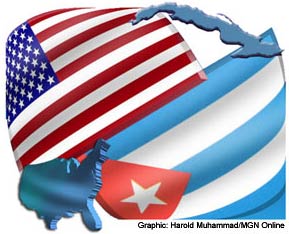
Who knows what may happen between now and midnight EDT on the U.S. Atlantic Coast? But for now, the big news is the United States and Cuba are toying with restoring diplomatic relations,  and opening trade and travel to make nice with one another. What will it mean  between the two close next-door neighbors -- one communist, one free?

In a historic thaw of a relationship chilled since the early days of the Cold War, the United States announced plans Wednesday to restore diplomatic and economic ties with the communist island of Cuba.
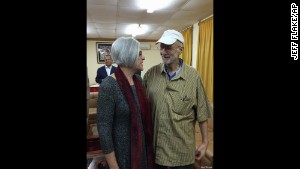
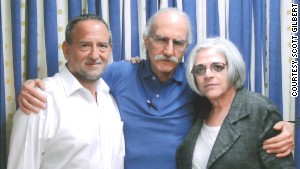
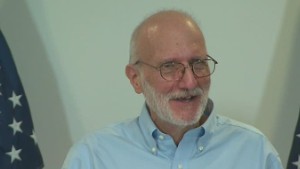
The changes came with the abrupt release of an American government contractor, Alan Gross, who had been imprisoned in Cuba for five years. He stood when his plane cleared Cuban airspace and stepped off in the United States to hugs on the tarmac.
At the same time, the United States released three Cubans jailed for 15 years on spying charges, and Cuba released a U.S. spy held there for two decades.
President Barack Obama declared that the United States was ending an "outdated approach" after five decades of isolation failed to accomplish the goal of a democratic and prosperous Cuba. The United States and Cuba severed diplomatic relations in 1961, two years after forces led by Fidel Castro overthrew the Cuban government.
"Neither the American nor the Cuban people are well-served by a rigid policy that's rooted in events that took place before most of us were born," Obama said from the White House. "It's time for a new approach."
Obama said that the United States would relax travel, banking and commerce restrictions, and he instructed Secretary of State John Kerry to start talks to re-establish diplomatic relations, including the eventual opening of an American embassy in Havana.
"Nobody represents American values better than the American people," Obama said, "and I believe this contact will ultimately do more to empower the Cuban people."
A ban on travel to Cuba by American tourists can only be lifted by Congress, but Obama promised to talk to lawmakers about ending the full economic embargo. In the meantime, other licensed travelers will be allowed to bring home Cuban cigars.
Obama also told Kerry to review the U.S. designation of Cuba as a state sponsor of terrorism, which has been in place since 1982.
While Obama was speaking in Washington, President Raul Castro went on Cuban television to welcome the restored relationship. But he said there were still profound disagreements, including on human rights, and he said the two countries must live with their differences "in a civilized manner." 


Verne Strickland (USA DOT COM)
National and international news sources, and social news reporters like myself are all grappling with how how all this will play out. But, in the interplay between the Cuban communist government and the global powerhouse USA, some tectonic shifts are already taking place.

While NBC dealt with the expected headlines -- diplomatic relations, military adjustments, trade and travel -- reporters like Jose Diaz Ballard tackled some of the more personal issues that American conservatives and patriots -- including me -- are concerned about:

JOSE DIAZ-BALART: MRC
And just within the last hour, this from the chairman of the Foreign Affairs Committee on the Senate. This is New Jersey Senator Bob Menendez among the things he says in his comments, his statement:

“President Obama’s actions have vindicated the brutal behavior of the Cuban government. There is no equivalence between an international aid worker and convicted spies who where found guilty of conspiracy to commit espionage against our nation...

"Trading Mr. Gross for three convicted criminals sets an extremely dangerous precedent. It invites dictatorial and rogue regimes to use Americans serving overseas as bargaining chips. I fear that today’s actions will put at risk thousands of Americans that work overseas to support civil society, advocate for access to information, provide humanitarian services, and promote democratic reforms.” Chairman of the Foreign Affairs Committee, Senator Bob Menendez from New Jersey releasing that statement just moments ago.

HuffPo: Among the expected changes as a result of the improvement in U.S.-Cuba relations is that licensed American travelers to Cuba will now be able to return to the U.S. with $400 in Cuban goods, including tobacco and alcohol products worth less than $100 combined. This means the long-standing ban on importing Cuban cigars is over, although there are still limits, according to a U.S. official who spoke on condition of anonymity ahead of the official White House announcement.

Sen. Marco Rubio, R-FL, who like Menendez is the son of Cuban immigrants, also slammed the president's action to open diplomatic relations, calling it "disgraceful."
"The White House has conceded everything," Rubio said at a news conference just moments after the president spoke, calling Obama the "worst negotiator" who has ever taken occupancy at the White House.
Rubio said the U.S. policy change has resulted in no commitment from Cuba to ensure freedom of the press, speech and elections.
While Congress is responsible for lifting the trade embargo, which Obama can't do unilaterally, Rubio promised to use his power as incoming chair of a Foreign Relations subcommittee next year to pressure the administration on Cuba policy. He said he is likely to be very skeptical in his role to oversee the administration's efforts to confirm diplomats to Cuba and an embassy there.

NBC News House Speaker John Boehner also slammed the new policy. "Relations with the Castro regime should not be revisited, let alone normalized, until the Cuban people enjoy freedom - and not one second sooner. There is no 'new course' here, only another in a long line of mindless concessions to a dictatorship that brutalizes its people and schemes with our enemies."
Senators Lindsey Graham of South Carolina and John McCain of Arizona, also denounced the policy change with Cuba. "It is about the appeasement of autocratic dictators, thugs, and adversaries, diminishing America's influence in the world," the duo wrote in a statement.
Sen. Ted Cruz, another potential 2016 contender and whose parents are Cuban immigrants, said the agreement with Cuban leader Raul Castro has made the situation "worse."
"Fidel and Raul Castro have just received both international legitimacy and a badly-needed economic lifeline from President Obama. But they remain in control of a totalitarian police state modeled on their old state sponsor, the Soviet Union," Cruz said in a statement.

the right scoop: John Bolton says that even worse than the mistake of dealing with Cuba bilaterally is the message this sends to the world:
The president for his own ideological reasons has reversed 55 years of American policy. So our adversaries all around the world will be saying ‘two years to go in the Obama administration; now is the time to line up and get what we want.’
This is a very, very bad signal of weakness and lack of resolve by the President of the United States.
Regarding Cuba itself, Bolton says it is a mistake to think that giving Cuba a benefit will suddenly turn it into a free society. And he plainly calls Obama’s policy on Cuba ‘appeasement’.
BREITBART: President Obama says he respects the opinion of the many people who oppose his dramatic change in policy toward Cuba. “To those who oppose the steps I’m announcing today, let me say that I respect your passion and share your commitment to liberty and democracy,” Obama said.
But Obama says it's time to change the policy. He says it was obvious to him that it hadn’t made a difference in changing the status of democracy in Cuba.
“I do not believe we can keep doing the same thing for over five decades and expect a different result,” he said, “Moreover, it does not serve America's interests or the Cuban people to try to push Cuba towards collapse.”
Obama urged Cubans who were concerned about America’s attempt to “colonize” the country to put their grievances behind them.
“Let us leave behind the legacy of both colonization and communism, the tyranny of drug cartels, dictators and sham elections,” he said. “A future of greater peace, security and democratic development is possible if we work together. Not to maintain power, not to secure vested interests but instead to advance the dreams of our citizens.”



What Now?: Nine questions you were embarrassed to ask about the Cuban embargo. (You'll have more.)


By Jeremy Diamond, CNN

updated 7:24 PM EST, Wed December 17, 2014

Will U.S. 'normalize' relations with Cuba?

STORY HIGHLIGHTS
  • Obama will ease sanctions imposed against Cuba for more than 50 years following the release of Alan Gross
  • The changes will ease travel restrictions and allow U.S. and Cuban banks to build relationships
  • The changes come after a flurry of diplomatic efforts to free Gross and changes in the political dialogue in the U.S.
Washington (CNN) -- President Barack Obama will ease sanctions imposed against Cuba under the U.S. embargo after Cuba agreed to release American aid worker Alan Gross.
The agreement will deliver the most sweeping changes in the U.S. policy toward the nation that lies just 100 miles off the U.S. coast since the U.S. embargo on Cuba started in the early 1960s.
Most Americans - including President Obama - weren't alive when the embargo went into effect. So get up to speed on the last five decades of American foreign policy toward Cuba.
Why did the embargo start in the first place?

Gross: Crucial to know I wasn't forgotten
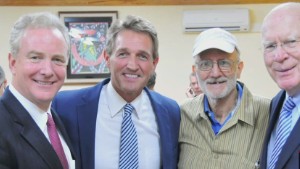
An 'elated' Gross was ready to come home
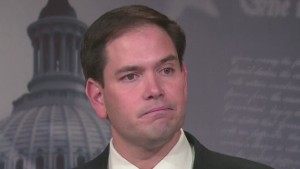
Rubio: Obama is the worst negotiator

Report: Cuba releases imprisoned American
The U.S. began imposing sanctions against Cuba after Fidel Castro seized power in 1959 and soon after nationalized more than $1 billion in American assets on the island. That's two years before Obama was even born.
The U.S. ratcheted up sanctions on Cuba in 1960 and 1961 with President John F. Kennedy making the embargo official in 1962.
Diplomatic relations between the United States and Cuba broke off in 1961 as tensions between the two nations increased after Cuba signed a trade agreement with the Soviet Union. Relations remained mostly frozen throughout the Cold War.
Today, Cuba remains an autocratic regime - Fidel Castro's brother Raul is president - with a poor record on human rights and a track record of silencing dissent and restricting the rights of its citizens.
What kind of restrictions does the embargo currently impose?
The embargo not only keeps American companies from doing business in Cuba, but also prohibits most Americans from traveling directly there or spending money as tourists.
American citizens can face up to a $65,000 fine for spending money in Cuba, according to the U.S. Treasury Department. The embargo also limits the amount of individuals can send to family living in Cuba.
So what's changing?
Both countries will work toward reestablishing embassies.
The U.S. will ease travel restrictions, making it easier for Americans to travel to Cuba and do business there.
U.S. and Cuban banks will be allowed to start building relationships and that means American travelers will be able to use their credit and debit cards when visiting.
Americans returning from a trip to Cuba can now return with up to $400 in Cuban goods, a quarter of which can be spent on alcohol and tobacco.
Think Cuban cigars.
And in return, Cuba will free 53 political prisoners and significantly relax its restrictions on Internet access. Gross had been arrested after delivering satellite phones and other communications equipment to Cuba's small Jewish population.
So why doesn't Obama just end the embargo altogether?

Alan Gross back on U.S. soil

Richardson: Prisoner release is 'huge'
Cuban-Americans in Miami testy
He can't. Only Congress can end a trade embargo, which is enshrined into law. But according to White House officials, the President can ease certain restrictions under his executive authority.
This is the third time Obama has acted to ease the embargo. But policy changes in 2009 and 2011, which eased travel restrictions for Cuban-Americans and later for academics and religious groups, didn't come close to the scope of Wednesday's landmark agreement.
Does the U.S. have international backing to keep the embargo in place?
Barely. Over the last two decades, the United Nations General Assembly has voted each year against the embargo, calling on the U.S. to reverse its policy.
Only Israel has joined the U.S. in voting against the resolution.
What's the political climate like in the U.S.?
It's shifting and more political leaders and Cuban-Americans have been calling for changes in the U.S.'s policy toward Cuba in recent years.
Cuban refugees in the U.S and their descendants have historically been the most vocal group in calling for a tough U.S. policy against Cuba. But nearly 7 in 10 Cubans now favor reestablishing diplomatic relations with Cuba and about half want the U.S. to end the embargo, according to a Florida International University poll this summer.
That has changed the climate of politics in the Miami-area and throughout Florida where most of the Cuban-American community resides, a shift that is sending ripples throughout the country.
What have politicians been saying about Cuba recently and what's the Pope got to do with it?
Former Secretary of State and potential 2016 presidential candidate Hillary Clinton has called for an end to the embargo, calling it "Fidel Castro's best friend."
And President Obama stopped short of calling for an end to the embargo, but made it clear in 2013 that the U.S. policy needs to change.
"The notion that the same policies that we put in place in 1961 would somehow still be as effective as they are today, in the age of the Internet and Google and world travel, doesn't make sense," Obama said at a November 2013 fundraiser in Florida. "We have to continue to update our policies."
A month later, Obama shook hands with Castro at Nelson Mandela's funeral in South Africa in a moment that played on TV screens around the world. Since then, negotiations have continued and even the Pope weighed in. He recently wrote letters to both Obama and Castro encouraging compromise.
But a pair of potential 2016 Republican presidential candidates from Florida have emphatically defended the embargo.
Former Florida Gov. Jeb Bush, who announced Tuesday his decision to "actively explore" a 2016 run, said this year the ban should actually be strengthened, not lifted.
And Sen. Marco Rubio, whose parents fled Cuba after Fidel Castro's takeover, has called the embargo "the last tool we have remaining to ensure that democracy returns to Cuba one day."
How has Gross' detention impacted the debate?
Gross' imprisonment in 2009 set off a series of diplomatic exchanges between the two countries that involved prominent U.S. politicians.
Sen. Patrick Leahy, chair of the Senate Judiciary Committee, led congressional delegations to Cuba in 2012 and 2013 to secure Gross' release that included in 2013 three Democratic Senators, a Republican Senator and two Democratic congressmen.
That same year, 66 senators wrote President Obama urging him to "act expeditiously to take whatever steps are in the national interest to obtain [Gross's] release."
And in November, Sens. Jeff Flake, a Republican, and Democrat Tom Udall traveled to Cuba in another attempt to negotiate Gross' release.
In 2011, former President Jimmy Carter also made an attempt as did former New Mexico Gov. Bill Richardson, whose efforts were backed by the State Department.
Sounds like a lot of political capital has been poured into this effort. How much has Cuba been impacted by the embargo?
Cuba said in 2011 that the economic damage of the U.S. embargo has topped $1 trillion in its five decade history.
The embargo's crippling effects on the Cuban economy prompted Raul Castro, the brother of the country's famed dictator, to beef up efforts to end the embargo once he took the helm in 2008.
While Cuba was sustained by a serious trading relationship with the Soviet Union throughout the Cold War, the Cuban economy took a hard hit with the Soviet Union's collapse in 1991.

CNN's Elise Labott contributed to this report.

Tuesday, December 16, 2014

World War II 'Battle of the Bulge' began this date: Dec. 16, 1944 -- with personal story of a veteran who was there.


World War II 'Battle of the Bulge' began this date: Dec. 16, 1944


On this day, the Germans launch the last major offensive of the war, Operation Mist, also known as the Ardennes Offensive and the Battle of the Bulge, an attempt to push the Allied front line west from northern France to northwestern Belgium. The Battle of the Bulge, so-called because the Germans created a "bulge" around the area of the Ardennes forest in pushing through the American defensive line, was the largest fought on the Western front.
The Germans threw 250,000 soldiers into the initial assault, 14 German infantry divisions guarded by five panzer divisions-against a mere 80,000 Americans. Their assault came in early morning at the weakest part of the Allied line, an 80-mile poorly protected stretch of hilly, woody forest (the Allies simply believed the Ardennes too difficult to traverse, and therefore an unlikely location for a German offensive). Between the vulnerability of the thin, isolated American units and the thick fog that prevented Allied air cover from discovering German movement, the Germans were able to push the Americans into retreat.

Massive loss of American and civilian life
The battle raged for three weeks, resulting in a massive loss of American and civilian life. Nazi atrocities abounded, including the murder of 72 American soldiers by SS soldiers in the Ardennes town of Malmedy. Historian Stephen Ambrose estimated that by war's end, "Of the 600,000 GIs involved, almost 20,000 were killed, another 20,000 were captured, and 40,000 were wounded." The United States also suffered its second-largest surrender of troops of the war: More than 7,500 members of the 106th Infantry Division capitulated at one time at Schnee Eifel. The devastating ferocity of the conflict also made desertion an issue for the American troops; General Eisenhower was forced to make an example of Private Eddie Slovik, the first American executed for desertion since the Civil War. The war would not end until better weather enabled American aircraft to bomb and strafe German positions. The date was 25 January 1945.

Patriotic 85-year-old World War II veteran talks about 'The Greatest Generation': Robert T. Bradacich fought in Battle of the Bulge

Wilmington NC June 13, 2010 12:30 AM MST)

 By Verne Strickland   
Bob was attending the grand opening of an expanded headquarters space for Pantano for Congress -- GOP nominee for North Carolina’s Seventh District of the U.S. Congress.
“I don’t have much time left,” said 85-year-old Robert T. (Bob) Bradicich.
It was a candid “open microphone” comment before I went into an interview with this World War II veteran at a campaign event for Ilario Pantano. I knew what Bob meant, and it broke my heart.
Ilario had introduced us moments before, saying, “Bob’s an amazing guy and a great friend. He’s been there.”
“There” was Bob’s war. Normandy shortly after the D-Day landings. The liberation of Paris. Fighting through Belgium and Luxembourg. The Seigfried Line. The Battle of the Bulge.. The German blitzkrieg.
Many times, on many a chaotic battlefield, Bob – in those earlier times, in his youth -- had thought the same words that slipped out just before our interview: “I don’t have much time left.” That was in war. Now, in 2010, it is not war, but age that is stalking him.
A total of 16,112,566 individuals were members of the United States armed forces during World War II. There were 291,557 battle deaths, 113,842 other deaths in service (non-theater), and 671,846 non-mortal woundings. As of September 30, 2009, there were approximately 2,272,000 American veterans still living.
The ranks of these survivors are thinning at an increasing rate. Approximately 850 American World War II veterans die every day. The median age for a World War II veteran in February 2009 was 86 years.
So I sat with this wonderful unassuming American hero – a plain-spoken New Yorker now living in Wilmington – a dues-paying member of the Greatest Generation, aptly named by Tom Brokaw.
As an active and enthusiastic volunteer for Ilario Pantano, Bob speaks to groups about the war. He wants them to know what it was like. Not to shame them, but to remind them of the price of freedom.

 “I talk about the sailors at sea, whose ship goes down, and lay in unmarked graves under the ocean, and the airmen shot down, and for me, as an infantryman. I told them that when I dig a foxhole, I don’t know if that’s going to be my grave or not. I may have dug a hundred foxholes in France, and had the same thought every time.”
Bob’s humility is genuine and endearing.
“After I got through with my talk, the people applauded. That surprised me. But it was great to know they understood. That meant a lot to me.”
Why is this remarkable American patriot at a campaign program for a Republican candidate approximately fifty years younger than he is?
“I’m here because I believe in what Ilario Pantano stands for. The United States is losing a lot of our freedoms, and I want Ilario to go to the U.S. Congress and get America back to its roots – a country of the people, by the people, and for the people – so that we can live in peace again. And may that happen. Oh, God, I hope it does.”
Bob wrote a book. It’s a good one. Honest, matter-of-fact, full of his personal stories of battles -- horror, loss, victories, courage, and his buddies in the 28th Infantry Division. Some survived. Many didn’t.
“I’m not a hero,” Bob reminded. “The heroes are the ones who didn’t return. They paid dearly. I just gave them time. Yes, I was fighting over there. But they gave everything. I came back.”
This is a statement made by many survivors of combat. There is almost a hint of guilt that they did not die too. Maybe those who returned from any and every war will never be totally relieved of this feeling while on this earth. It’s futile to tell them otherwise – that they fought valiantly, and owe nothing more. But they do know and respond graciously to true expressions of appreciation.
We owe them this.

                                                             **************************
“World War II, As I Lived It”, by Robert T. Bradicich, is the story of Mr. Bradicich’s experiences in World War II, in Europe, 1943 – 1945, while serving as a rifleman with the 28th Division, 110th Regimental Combat Team, Company ‘E’ ASN 32885196. It is a compelling personal story, and is illustrated with both color and black-and-white photographs. Copyright @ 2000 by Robert Bradicich. For information about copies, contact the author at     Bobb7@atmc.net.

Pakistan Taliban: Peshawar school attack leaves 141 dead. Oh, no!


Pakistan Taliban: Peshawar school attack leaves 141 dead -- Oh no!

(This is an extensive report from BBC on this horrendous attack by muslim terrorists. Please stick it out if you can. The coverage, which is warranted by the scope of this senseless terrorist carnage, is impressive. Also covered today on FOX.)

Verne Strickland: This report really made me catch my breath. I have a close personal relationship via FB with a devout Christian gentlemen in that country. He heads a Christian school in a location I won't divulge at this moment. Many FB colleagues in the U.S. know, support, and pray for this courageous man. My prayer at this time is that the mission has escaped attack and carnage. It is unthinkable that this should be otherwise. God bless you, my dear Christian friend. I know that the alarm, which has been constant, has been ratcheted up exponentially. We do pray for your safety and well-being.

One 13-year-old hospital patient tells the BBC's Shaimaa Khalil "they were firing...I was hiding under a chair."

Militants from the Pakistani Taliban have attacked a military-run school in Peshawar, killing 141 people, 132 of them children, the military say.
Officials say the attack in the north-western city is over, with all the attackers killed. Seven militants took part in all, according to the army.
Scores of survivors are being treated in hospitals as frantic parents search for news of their children.
The attack - the Taliban's deadliest in Pakistan - has been widely condemned.
There has been chaos outside hospital units to which casualties were taken, the BBC's Shaimaa Khalil reports from Peshawar.
Bodies have been carried out of hospitals in coffins, escorted by crowds of mourners, some of them wracked by tears.
Mourners carry the coffin of a student from a hospital in Peshawar, 16 December Coffins were carried out of Peshawar hospitals
Empty coffins stacked at a hospital in Peshawar, 16 December Empty coffins were delivered to a hospital in Peshawar in readiness for the removal of the dead
Relatives comfort injured student Mohammad Baqair in Peshawar, 16 December School pupil Mohammad Baqair lost his mother, a teacher, in the attack
A Taliban spokesman told BBC Urdu that the school, which is run by the army, had been targeted in response to army operations.
Hundreds of Taliban fighters are thought to have died in a recent military offensive in North Waziristan and the nearby Khyber area.
US President Barack Obama said terrorists had "once again shown their depravity" while UN Secretary General Ban Ki-moon said it was "an act of horror and rank cowardice to attack defenceless children while they learn".
line
Analysis: Aamer Ahmed Khan, BBC News This brutal attack may well be a watershed for a country long accused by the world of treating terrorists as strategic assets.
Pakistan's policy-makers struggling to come to grips with various shades of militants have often cited a "lack of consensus" and "large pockets of sympathy" for religious militants as a major stumbling-block.
That is probably why, when army chief Gen Raheel Sharif launched what he called an indiscriminate operation earlier in the year against militant groups in Pakistan's lawless tribal belt, the political response was lukewarm at best.
We will get them, was his message, be they Pakistani Taliban, Punjabi Taliban, al-Qaeda and affiliates, or most importantly, the dreaded Haqqani network. But the country's political leadership chose to remain largely silent. This is very likely to change now.
line
BBC map, showing the army school in Peshawar
Relatives wait outside a hospital in Peshawar, 16 December Anxious family members crowded around Peshawar hospitals
Soldiers help evacuate children Troops helped evacuate children from the school
Injured student being evacuated A total of 114 people were injured
As the day drew to an end, military spokesman Asim Bajwa told reporters in Peshawar that 132 children and nine members of staff had been killed.
All seven of the attackers wore suicide bomb vests, he said. Scores of people were also injured.
It appears the militants scaled walls to get into the school and set off a bomb at the start of the assault.
Children who escaped say the militants then went from one classroom to another, shooting indiscriminately.
One boy told reporters he had been with a group of 10 friends who tried to run away and hide. He was the only one to survive.
Others described seeing pupils lying dead in the corridors. One local woman said her friend's daughter had escaped because her clothing was covered in blood from those around her and she had lain pretending to be dead.
line
Deadly attacks in Pakistan
Mourners after the Peshawar church attack, 22 September 2013
16 December 2014: Taliban attack on school in Peshawar leaves at least 141 people dead, 132 of them children
22 September 2013: Militants linked to the Taliban kill at least 80 people at a church in Peshawar, in one of the worst attacks on Christians
10 January 2013: Militant bombers target the Hazara Shia Muslim minority in the city of Quetta, killing 120 at a snooker hall and on a street
28 May 2010: Gunmen attack two mosques of the minority Ahmadi Islamic sect in Lahore, killing more than 80 people
18 October 2007: Twin bomb attack at a rally for Benazir Bhutto in Karachi leaves at least 130 dead. Unclear if Taliban behind attack
line
A hospital doctor treating injured children said many had head and chest injuries.
Irshadah Bibi, a woman who lost her 12-year-old son, was seen beating her face in grief, throwing herself against an ambulance.
"O God, why did you snatch away my son?" AFP news agency quoted her as saying.
An injured girl is carried to hospital in Peshawar, 16 December Some of the injured were carried to hospital in people's arms
Children fleeing the school Both girls and boys went to the school
Pakistani troops at the scene Troops sealed off the area around the school
The school is near a military complex in Peshawar. The city, close to the Afghan border, has seen some of the worst of the violence during the Taliban insurgency in recent years.
Many of the students were the children of military personnel. Most of them would have been aged 16 or under.

Hundreds of parents are outside the school waiting for news of their children, according to Wafis Jan from the Red Crescent
Pakistani Taliban spokesman Mohammad Khurasani said the militants had been "forced" to launch the attack in response to army attacks.
Leading figures in Pakistan expressed grief and indignation
  • Pakistani Nobel laureate Malala Yousafzai said she and millions of others would mourn the dead children, her "brothers and sisters", adding "we will never be defeated"
  • Prime Minister Nawaz Sharif spoke of a "national tragedy"
  • Pakistani opposition leader and former cricket captain Imran Khan condemned the attack as "utter barbarism"
line
Are you in the area? Are you happy to speak to BBC News? Email your comment to haveyoursay@bbc.co.uk please remember to include your contact details if you are happy to speak to a BBC journalist.
Send your pictures and videos to yourpics@bbc.co.uk or text them to 61124 (UK) or +44 7624 800 100 (International). If you have a large file you can upload here.

Monday, December 15, 2014

Joe Biden: ‘I’ll Kill Your Son’ . . .

12.12.14 via Verne Strickland

   Joe Biden: ‘I’ll Kill Your Son’

http://nyoobserver.files.wordpress.com/2012/10/151389046.jpg

THE DAILY BEAST

In a speech Wednesday, the vice president recalled a moment from childhood when he ‘smashed [the] head’ of local bully—and then threatened to kill him.


Vice President Joe Biden said he once chased down a bully on his bicycle, physically assaulted him, and threatened to “kill” him—all in the name of protecting the honor of his sister Valerie.
Biden is, of course, famous for being a bit loose in his public remarks. But these comments, made Wednesday night in New York City, were particularly unbound.
Video screenshot
The vice president was being honored by Vital Voices, a women’s rights charity, at their event “celebrat[ing] men who combat violence against women.” Biden spoke about standing up for women—both in his personal and professional lives. In doing so, the vice president delighted the audience with a personal anecdote from his childhood as Joey Biden.
“I remember coming back from Mass on Sunday,” Biden began. “Always the big treat was, we’d stop at the donut shop…We’d get donuts, and my dad would wait in the car. As I was coming out, my sister [Valerie] tugged on me and said, ‘That’s the boy who kicked me off my bicycle.’”
“So I went home—we only lived about a quarter mile away—and I got on my bicycle and rode back, and he was in the donut shop.”
Biden remembered the boy was in a physically vulnerable position: “leaning down on one of those slanted counters.”
Sensing his opportunity, Joey Biden pounced: “I walked up behind him and smashed his head next to the counter.”
“I’m not recommending it,” he added.
“I walked up behind him and smashed his head next to the counter.”
“His father grabbed me, and I looked at his son and said, ‘If you ever touch my sister again, I’ll come back here again and I’ll kill your son.’ Now, that was a euphemism. I thought I was really, really in trouble… My father never once raised his hand to any one of his children—never once—and I thought I was in trouble. He pulled me aside and said, ‘Joey, you shouldn’t do that, but I’m proud of you, son.’”
The point of the story, Biden informed his audience as he accepted his “Voice of Solidarity” award, was that he was raised to know that it was necessary to “speak up and speak out” to correct wrongdoings. (Full disclosure: The event was held at the headquarters of IAC, the corporate parent of The Daily Beast.) Vital Voices in 2013 took over funds from the Women In The World foundation which originated at The Daily Beast.

In telling the tale of testosterone and a truly American desire for justice joining to propel him on his bicycle to defeat the Bad Guy in the donut shop, the vice president appeared to merge with The Onion’s caricature of him—achieving a moment of Peak Biden, or the bro-like state of being visibly pleased with the degree to which you do not give a damn.
It would be difficult to imagine another politician of Biden’s stature telling this story. Biden, after all, is known for his unbuttoned comments from the podium.
He described then-candidate Obama as “the first mainstream African-American who is articulate and bright and clean and a nice-looking guy. I mean, that’s a storybook, man.”
He told a partially black crowd of Mitt Romney in 2012: “He is going to let the big banks once again write their own rules, unchain Wall Street. He is going to put y’all back in chains.”
And, during his 1988 presidential campaign, he plagiarized the life story of British Labour Party leader Neil Kinnock and tried to pass it off as his own.
Which is a shame, in a sense. If Wednesday’s night’s remarks were any guide, Biden appears to have had a rather colorful upbringing of his own.
Sponsored Content by nRelate

Sunday, December 14, 2014

PAT BUCHANAN: The next real discussion about race in America "must be a two-way conversation."

Verne Strickland  December 15, 2014

This is a personal letter sent to me via private message -- from a friend I admire and trust. I will not identify him unless he gives me leave to do that. This is an important view of history and deserves much widespread attention:

Hello Brother, don't know if you've seen this or.not. I got it from my Uncle who's a Republican Mayor of a little town near Charlottesville. He also retired CIA and as my favorite uncle I put a lot of stock in this wisdom of his 80 year old mind.
Here's the email:The White Side of the Story of Negroes


http://freakoutnation.com/wp-content/uploads/2013/05/PatBuchanan.jpg


This is the reason CNN has dropped Buchanan. It's like Newt G. said,"You’re not supposed to bring up uncomfortable Facts."
(Verified on Buchanan’s website)

Finally. It is said publicly. I have never seen the white side explained better! Pat Buchanan had the guts to say it. It is about time!!

 Barack says we need to have a conversation about race in America . Fair enough. But this time, it has to be a two-way conversation.

BUCHANAN TO OBAMA

By Patrick J. Buchanan


Barack says we need to have a conversation about race in America . Fair enough. But this time, it has to be a two-way conversation. White
America needs to be heard from, not just lectured to. This time, the Silent Majority needs to have its convictions, grievances, and demands heard.
And among them are these:

First, America has been the best country on earth for black folks. It was here that 600,000 black people, brought from Africa in slave ships, grew
into a community of 40 million, were introduced to Christian salvation, and reached the greatest levels of freedom and prosperity blacks have ever
known. Jeremiah Wright ought to go down on his knees and thank God he is an American.

Second, no people anywhere has done more to lift up blacks than white Americans. Untold trillions have been spent since the '60s on welfare, food
stamps, rent supplements, Section 8 housing, Pell grants, student loans, legal services, Medicaid, Earned Income Tax Credits, and poverty programs
designed to bring the African-American community into the mainstream. Governments, businesses, and colleges have engaged in discrimination
against white folks -- with affirmative action, contract set-asides and quotas -- to advance black applicants over white applicants. Churches,
foundations, civic groups, schools and individuals all over America have donated their time and money to support soup kitchens, adult education,
day care, retirement and nursing homes for blacks.


We hear the grievances. Where is the gratitude?

Barack talks about new 'ladders of opportunity' for blacks. Let him go to Altoona and Johnstown , and ask the white kids in Catholic schools how
many were visited lately by Ivy League recruiters handing out scholarships for'deserving' white kids.

Is white America really responsible for the fact that the crime and incarceration rates for African-Americans are seven times those of white
America ? Is it really white America's fault that illegitimacy in the African-American community has hit 70% and the black dropout rate from
high schools in some cities has reached 50%?

Is that the fault of white America or, first and foremost, a failure of the black community itself?

As for racism, its ugliest manifestation is in interracial crime, and especially interracial crimes of violence. Is Barack Obama aware that while
white criminals choose black victims 3% of the time, black criminals choose white victims 45% of the time?

Is Barack aware that black-on-white rapes are 100 times more common than the reverse, that black-on-white robberies were 139 times as common in
The first three years of this decade as the reverse?

We have all heard ad nauseam from the Rev. Al Sharpton about Tawana Brawley, the Duke rape case and Jena . And all turned out to be hoaxes. But
about the epidemic of black assaults on whites that are real, we hear nothing.

Sorry, Barack, some of us have heard it all before, about 40 years and 40 trillion tax dollars ago. This needs to be passed around because, this is a
message everyone needs to hear!!!

OK...........will you pass it on?

YES. I did but will you?

Because I'm for a better America.

I am Not racist, Not violent, Just not silent anymore.
Chat Conversation End

"BAD DREAM IS OVER; HOOPS DREAM ALIVE" is front page story for "STAR-NEWS". Where are our priorities?

 I will explain this below . . .


 By Verne Strickland
Conservative Curmudgeon

I have a confession to make. I was beginning to calm down on my chronic vendetta against our own personal community paper -- the vaunted "Star-News"

But all of that good will is now in the past. On this Sunday, the Lord's Day, when love should reign everywhere, this curious publication has featured this front page headline (in all caps, and in color): "BAD DREAM IS OVER; HOOPS DREAM ALIVE."

And that ain't all. That headline leads us to a photo of a girl named Jada Bacchus, and underneath that we are informed that: "Off team, Jada was ready to quit school too. But she perservered."

Then there's another photo (we're still on the front page, if you can believe it what I'm saying) showing Ashley senior Jada with her teammates and right hands over their respective hearts.

Then, after a little copy, there's a jump "See JADA 4A". And finally, people, we get to a two-page spread on the same topic. Now, look, I'm sure this young lady deserves a little praise (although I wasn't interested enough to wade through all the details to find out why) but I don't really that when we beat the evil Islamic Front so bad that they surrender and become Christians, or when Hillary gives up the cause and starts stumping for Vice President, or when UNC get a case of the guilts and stops cheating for black athletes -- in any one of those outstanding developments, I don't feel for a moment that the coverage will be more lavish, overblown and undeserved than this story was.

In her defense, this lovely young lady has had a tough time and deserves a break. I have no criticism of her, and do not want to rain on her parade. It's just that -- Damn, boy! Let's try to maintain our composure in the newspaper editor's office. This was just story overkill at its most murderous. 

People, where are our priorities in life? What has it come to, when a happy little feel-good offering like this goes in the same place that real headlines like this occupied way back in 1945:  "IT'S OVER. TRUMAN NUKES JAPAN. TOJO SURRENDERS!" No comparison at all, wouldn't you agree?

Look, put the sports stories on the sports page, along with "Seahawks head to Louisville", and "Wildcats topple Heels", and Oregon QB Mariota wins Heisman Trophy. (Now that last one is more worthy than 'BAD DREAM IS OVER'. And I say that because Marcus Mariota, while clearly deserving of the honor, is also white.

Okay, I know I'm a jerk. But I'm a conservative Christian patriotic jerk who can't wait for Obama to clear out his desk, and for Thom Tillis and David Rouzer to get sworn in so they can run roughsod over the mess that Nancy Pelosi and Harry Reid made of our beloved U.S. Congress.

Wouldn't you say that should count for something? We've said that our time is coming, and it won't be many days before it arrives.

And all liberal, lying, anti-America, pro-Socialist Democrats will get their comeuppance -- or at least some of it. That'll do for now.

And what will the headlines be on that day?